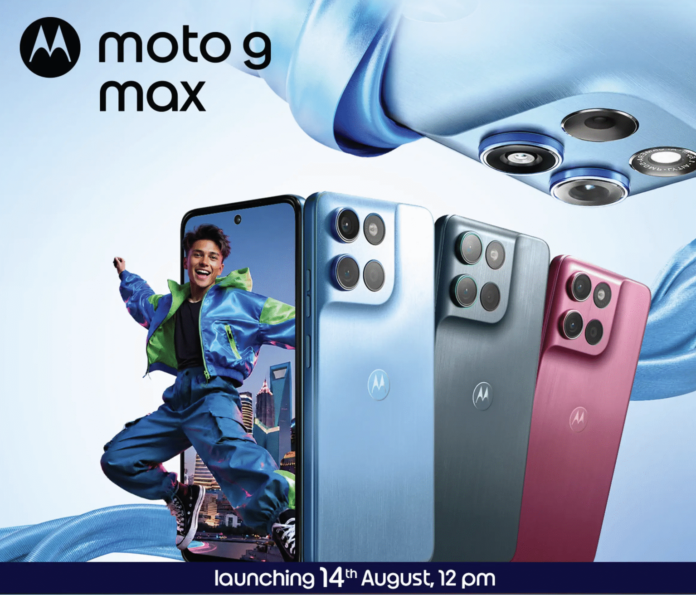
Smartphone marketing has a long history of giving us numbers that sound impressive on a billboard but feel completely ordinary once you unbox the device. So, when Motorola confirmed that the Moto G Max would land in India on August 14, 2026 carrying a staggering 7,000mAh battery, it was easy to react with a healthy dose of skepticism.
We’ve seen giant battery phones before. Historically, they were thick, heavy bricks with low-tier processors, mediocre displays, and charging speeds so slow you had to plug them in before going to bed just to wake up to 80%.
However, pre-launch listings on Flipkart and Motorola’s official microsites reveal that the Moto G Max takes a fundamentally different path.

Motorola didn’t just cram a bigger power pack into an existing chassis. Instead, they redesigned the internals specifically for the Indian market, swapping out the global variant’s MediaTek silicon for a 4nm Snapdragon platform, upgrading the storage format to UFS 3.1, and switching out a megapixel-heavy primary camera for a much more reliable Sony sensor.
If you’re keeping an eye on mid-range launches before making your next smartphone upgrade, here is a grounded look at what the Moto G Max actually brings to the table.
The Indian Hardware Swap: Snapdragon 6s Gen 4 vs. Dimensity 6400
When the Moto G Max debuted globally in June, it shipped with MediaTek’s Dimensity 6400 processor, UFS 2.2 storage, and a headline-grabbing 200MP camera sensor.
Many buyers assumed India would get the exact same blueprint. Instead, Motorola made three critical hardware alterations for the Indian release:
+-------------------+--------------------------------+--------------------------------+
| Hardware Element  | Global Moto G Max              | Indian Moto G Max Variant      |
+-------------------+--------------------------------+--------------------------------+
| Processor         | MediaTek Dimensity 6400 (6nm)  | Qualcomm Snapdragon 6s Gen 4   |
| Process Node      | TSMC 6nm                       | Samsung 4nm (4LPX)             |
| RAM / Storage     | LPDDR4X + UFS 2.2              | LPDDR5X + UFS 3.1              |
| Main Optics       | 200MP High-Res Sensor          | 50MP Sony LYTIA 600 (LYT-600)  |
| Operating System  | Android 16 (Hello UI)          | Android 16 (Hello UI)          |
+-------------------+--------------------------------+--------------------------------+
This regional swap isn’t a downgrade—it’s actually a major practical upgrade.
1. Architectural Efficiency (4nm vs. 6nm)
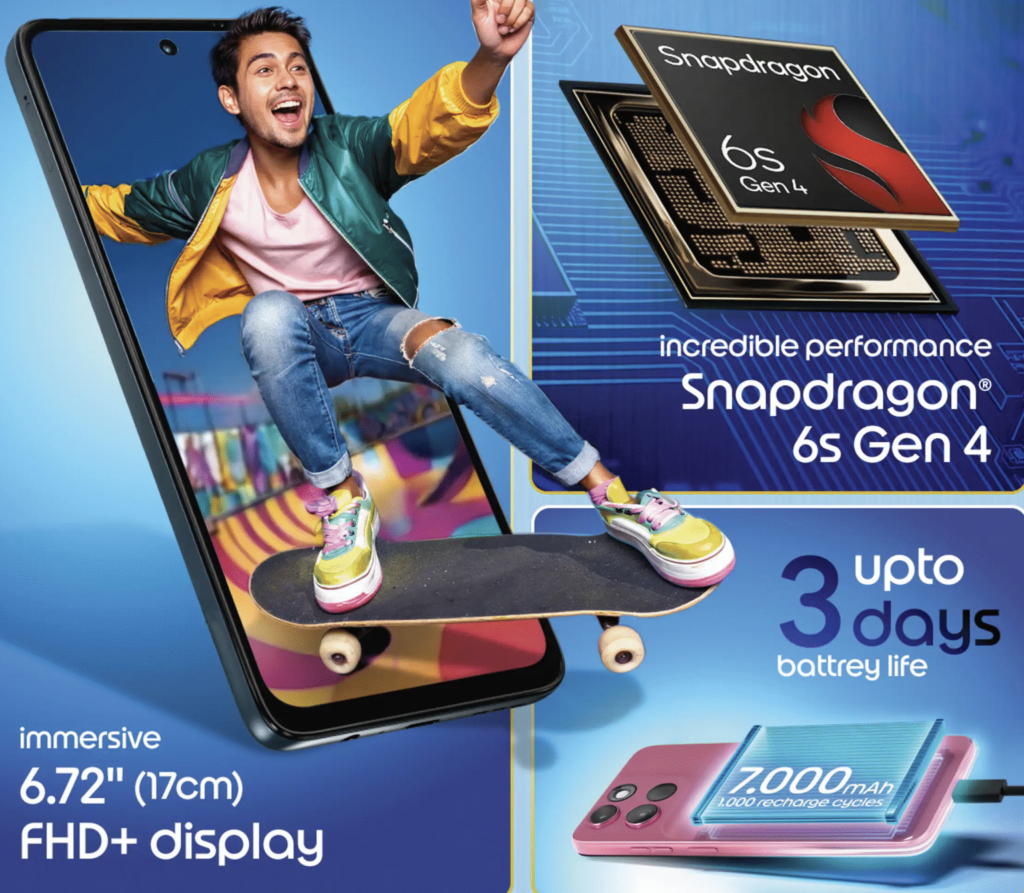
The Qualcomm Snapdragon 6s Gen 4 is fabricated on a 4nm node. Moving down from the Dimensity 6400’s 6nm process means less power lost as heat. Under daily multitasking, a cooler-running chip protects sustained performance and helps extract maximum efficiency from that massive battery pack.
2. Eliminating the Memory Bottleneck
Mid-range processors are often choked by cheap storage. By pairing the Snapdragon 6s Gen 4 with LPDDR5X RAM and UFS 3.1 flash storage, Motorola effectively doubles read and write speeds compared to older UFS 2.2 drives. App installations, large photo exports, and UI animations will feel noticeably snappier over time.
3. Practical Optics over Megapixel Marketing
Trading a 200MP sensor for a 50MP Sony LYT-600 might look like a step backward to casual shoppers, but camera performance relies heavily on sensor physics. The 1/1.95-inch Sony LYT-600 delivers vastly superior dynamic range, faster autofocusing in low light, and far less aggressive digital noise processing than sub-pixel-binned 200MP alternatives.
Real-World Performance & Gaming Benchmarks
What does this hardware mean for day-to-day speed?
The Snapdragon 6s Gen 4 utilizes an 8-core CPU layout featuring 4x ARM Cortex-A78 performance cores clocked at 2.4GHz alongside 4x Cortex-A55 efficiency cores at 1.8GHz, backed by an Adreno GPU.
In synthetic testing, this setup produces very steady results:
- AnTuTu v11 Score: ~805,000 points.
- Geekbench 6: ~1,013 (Single-Core) | ~2,876 (Multi-Core).
- 3DMark Wild Life Extreme Stability: 99.2%.
                     ANTUTU V11 PERFORMANCE TIER

    POCO X Series / Dimensity 8300   |============================| 1,350,000+

    Moto G Max (Snapdragon 6s Gen 4) |=================| 805,000

    Global Model (Dimensity 6400)    |===========| 545,000

    Older Budget Standard (G54/G34)  |=======| 450,000
Day-to-Day Speed
With stock-like Android 16 (Hello UI) and 120Hz refresh rates, navigating menus, switching between social apps, and streaming high-bitrate video happens without stutter. The 8GB physical RAM (expandable via RAM Boost virtual allocation up to 18GB) keeps plenty of background apps cached without forcing aggressive app reloads.
Gaming Expectations
This is a balanced mid-range chip, not a flagship gaming processor.
- BGMI / Call of Duty Mobile: Runs comfortably at Smooth + Extreme (60 FPS) settings with minimal frame drops.
- Genshin Impact / Heavy 3D Titles: Playable on Medium graphics settings around 35–40 FPS.
Where the chip shines is thermal stability. During extended 15-minute stress tests, the Snapdragon 6s Gen 4 holds over 83% of its peak CPU performance, avoiding the abrupt frame drops that plague some competing processors.
The 7,000mAh Silicon-Carbon Battery: How Long Does It Actually Last?
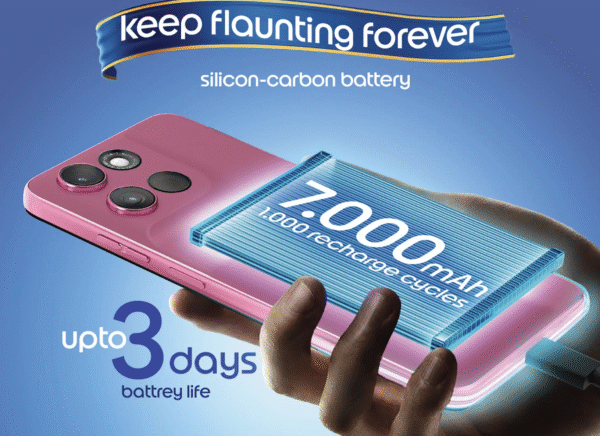
The standout highlight of the Moto G Max is its 7,000mAh battery. Motorola advertises up to three days of light-to-moderate use.
Why Silicon-Carbon Chemistry Matters
Historically, putting a 7,000mAh battery into a phone turned it into a thick, unwieldy slab. Motorola got around this by using a silicon-carbon anode cell. Silicon-carbon batteries offer roughly 10% to 15% higher energy density than standard graphite lithium-ion batteries, squeezing 7,000mAh of energy into a device that maintains
Promoting a massive 7,000mAh silicon-carbon battery, 120Hz refresh rate, and military-grade drop protection, the device looks like a heavy-duty workhorse on paper. But look closer at the specifications revealed ahead of its Flipkart debut, and an even more interesting narrative emerges.
This isn’t just another incremental mid-range release. The version landing in India is a radically different beast from the global variant introduced in overseas markets like Brazil. Motorola swapped key internal components—ranging from the processor down to the storage architecture and primary camera sensor—tailoring the phone specifically for Indian network conditions and usage patterns.
Here is an in-depth breakdown of what Motorola is bringing to the table, how the hardware actually holds up, and whether you should wait for the August 14 reveal.
The Regional Twist: Why the Indian Variant is Surprisingly Superior
When smartphone manufacturers create region-specific variants, Indian consumers often worry about downgraded specs. Surprisingly, with the Moto G Max, the exact opposite has happened.
The global iteration of the Moto G Max launched with a MediaTek Dimensity 6400 chipset, older UFS 2.2 storage, and a marketing-friendly 200MP camera sensor. The Indian model, however, receives a series of practical silicon upgrades:
+-------------------+--------------------------------+--------------------------------+
| Feature           | Global Variant                 | Indian Variant                 |
+-------------------+--------------------------------+--------------------------------+
| Processor         | MediaTek Dimensity 6400 (6nm)  | Snapdragon 6s Gen 4 (4nm)      |
| Storage Tech      | UFS 2.2                        | UFS 3.1                        |
| RAM Tech          | LPDDR4X                        | LPDDR5X                        |
| Primary Camera    | 200MP High-Res Sensor          | 50MP Sony LYTIA 600            |
| Battery Capacity  | 5,200mAh to 7,000mAh (Varies)  | Guaranteed 7,000mAh            |
+-------------------+--------------------------------+--------------------------------+
1. Silicon Architecture: 4nm Snapdragon vs 6nm Dimensity
The transition from the MediaTek Dimensity 6400 (a 6nm process node) to Qualcomm’s Snapdragon 6s Gen 4 (built on a 4nm node) is a massive win for efficiency.
In benchmark testing, the 4nm Snapdragon 6s Gen 4 regularly posts AnTuTu scores around 800,000 points, compared to the ~545,000 points produced by the Dimensity 6400. More importantly, 4nm fabrication yields significantly better thermal efficiency. When paired with a large battery, a cooler-running chip means less thermal throttling during sustained navigation, video recording, or outdoor gaming under direct sunlight.
2. The UFS 3.1 & LPDDR5X Speed Boost
Raw processor speed means little if memory bottlenecks app loading. By upgrading the Indian variant to UFS 3.1 flash storage and LPDDR5X RAM, Motorola doubled read/write bandwidth compared to standard UFS 2.2 drives. Apps will launch faster, photos will process in fewer milliseconds, and Motorola’s “RAM Boost” (which allocates up to 10GB of storage as virtual RAM) will run smoother without stalling the system.
3. Sony LYTIA 600 Beats Megapixel Marketing
While a “200MP camera” makes for flashy billboards, real-world optics tell a different story. Megapixel packing on small mobile sensors often results in heavy digital noise and sluggish shutter speeds in dim environments.
The Indian variant’s 50MP Sony LYTIA 600 sensor is a proven performer. Featuring a larger native pixel size and superior All-Pixel Omni-directional Autofocus, the LYT-600 captures significantly cleaner dynamic range, vastly superior skin tones, and faster shutter response when shooting moving subjects indoors.
Breaking Down the 7,000mAh Battery: Marketing vs. Reality
The undeniable focal point of the Moto G Max is its 7,000mAh battery. Motorola explicitly claims up to “three days of battery life” on a single charge.
The Silicon-Carbon Advantage
In the past, packing a 7,000mAh cell required a thick, heavy chassis that felt like carrying a brick in your pocket. Motorola avoids this ergonomic trap by utilizing silicon-carbon battery technology.
By replacing traditional graphite anodes with silicon-carbon composites, battery manufacturers can store roughly 10% to 15% more energy per cubic centimeter. This allows the Moto G Max to retain a reasonable slim profile and flat-frame ergonomics while housing a battery 40% larger than the industry-standard 5,000mAh capacity.
                  TYPICAL DAILY BATTERY DRAIN COMPARISON

    100% |============================================================|
         |                                                            |
     75% |----------------------------- [Standard 5,000mAh Phone]     |
         |                             (Ends Day 1 at ~20%)           |
     50% |------------------------------------------------------------|
         |                                                            |
     25% |------------------------------------------------------------| Moto G Max (7,000mAh)
         |                                                               (Ends Day 1 at ~55%)
      0% +------------------------------------------------------------+
         0h           12h          24h          36h          48h
What “3 Days of Battery Life” Actually Means
Can you really go three full days without plugging in? That depends on your usage profile:
- Light Users (Calls, WhatsApp, Wi-Fi browsing, media playback): Yes, 3 full days is entirely achievable. The standby draw on Android 16 with Qualcomm’s 4nm efficiency cores is minimal.
- Moderate Users (5G data active, 2 hours of social scrolling, GPS navigation): Expect 2 solid days. You can comfortably leave home on Monday morning and not worry about charging until Tuesday night.
- Power Users (Heavy gaming, constant 5G hotspot, high display brightness): 1.5 to 2 days. Even under heavy stress, killing a 7,000mAh cell in a single day requires deliberate effort.
One potential caveat to consider: charging speeds. Early spec sheets indicate support for 30W to 33W fast charging. While safe for long-term battery health (Motorola rates the cell for 1,000+ charge cycles), topping up a massive 7,000mAh cell from 0% to 100% at ~30W will take roughly 80 to 90 minutes. The strategy here isn’t rapid top-ups—it’s charging overnight and forgetting about power banks for days.
Display, Build Quality, and Outdoor Practicality
Beyond raw performance and battery life, Motorola has tailored the Moto G Max for real-world durability.
+-----------------------+-------------------------------------------------------------+
| Spec Category         | Moto G Max Hardware Feature                                 |
+-----------------------+-------------------------------------------------------------+
| Display Panel         | 6.72-inch FHD+ LCD, 120Hz Refresh Rate                 |
| Peak Brightness       | Up to 1,050 nits High Brightness Mode (HBM)                 |
| Screen Protection     | Corning Gorilla Glass 7i / Glass Ceramic               |
| Ingress Rating        | IP64 Dust & Water Splash Resistance                         |
| Structural Testing    | MIL-STD-810H Military Grade Drop/Thermal Certification      |
| Touch Enhancement     | Water Touch 2.0 Tech (Accurate tracking on wet glass)  |
| Color Options         | Pantone Curated: Stargazer, Malaga, Alaskan Blue             |
+-----------------------+-------------------------------------------------------------+
Display Performance & Water Touch 2.0
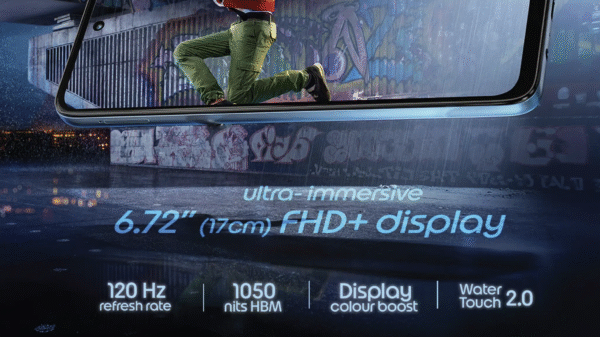
The phone features a 6.72-inch FHD+ LCD display running at a smooth 120Hz refresh rate. While display purists might prefer an AMOLED panel for deep blacks, LCDs avoid screen burn-in issues over multi-year lifespans. With an High Brightness Mode (HBM) output reaching 1,050 nits, outdoor legibility under direct sunlight remains clear.
A particularly practical addition is Water Touch 2.0. Anyone who has tried answering a call or navigating Google Maps in heavy rain knows how ghost touches ruin usability. Water Touch 2.0 recalibrates touch layer sensitivity dynamically, ignoring resting water droplets while accurately tracking finger movement.
Outdoor-Grade Durability
Motorola built the G Max with structural resilience in mind:
- MIL-STD-810H Certification: Guarantees survival against physical shock, drop impact, thermal shocks, and operational humidity.
- IP64 Protection: Seals internal components from fine dust particles and heavy water splashes.
- Gorilla Glass Protection: Offers improved resistance against scratches and micro-abrasions from keys or loose change.
Software, Audio, and Connectivity
On the software front, the Moto G Max ships out-of-the-box with Android 16 running Motorola’s clean Hello UI layer.
Unlike many competitors in the mid-range segment that overwhelm users with bloatware, aggressive lock-screen ads, and duplicate app stores, Hello UI remains close to stock Android. Motorola promises two major OS upgrades alongside three years of security patches.
Key Media & Ecosystem Features
- Dolby Atmos Stereo Speakers: Dual spatial speakers deliver rich audio output for movies and music without crackling at high volume.
- 3.5mm Headphone Jack: Retained at the top frame, offering latency-free wired audio monitoring for mobile gaming or media consumption.
- Smart Connect Desktop Mode: Syncs wireless file sharing, notification mirroring, and external display capabilities with Windows PCs and Android tablets.
Moto G Max vs. Moto G57 Power: Is It Worth the Upgrade?
Many consumers are wondering how the Moto G Max compares to last year’s highly popular Moto G57 Power—a device that also emphasized heavy battery performance.
+-------------------+-----------------------------+-----------------------------+
| Feature           | Moto G57 Power              | Moto G Max (2026)           |
+-------------------+-----------------------------+-----------------------------+
| Battery Capacity  | 6,000mAh Lithium-Ion        | 7,000mAh Silicon-Carbon     |
| Processor         | Snapdragon 6s Gen 4         | Snapdragon 6s Gen 4         |
| Memory Format     | UFS 2.2 / LPDDR4X           | UFS 3.1 / LPDDR5X           |
| Screen Protection | Gorilla Glass 3             | Gorilla Glass 7i / Ceramic  |
| Touch Tech        | Standard Capacitive         | Water Touch 2.0             |
| Android Version   | Android 15 (Out of Box)     | Android 16 (Out of Box)     |
| Price Positioning | ~₹14,999 to ₹16,999         | Expected ₹18,999 - ₹24,999  |
+-------------------+-----------------------------+-----------------------------+
Key Takeaway
If you already own the G57 Power, the core processing performance will feel almost identical since both utilize the Snapdragon 6s Gen 4 platform. However, the Moto G Max represents a comprehensive quality-of-life upgrade: you get faster memory speeds (UFS 3.1), an extra 1,000mAh of battery capacity, tougher military-grade glass/chassis protection, and a newer Android 16 baseline.
Expected Pricing and Market Positioning
Motorola will officially announce Indian retail pricing during the August 14 live stream. Early leak reports suggested pricing around ₹30,000, but analyzing supply chain data and hardware specs points toward a lower, more aggressive retail price.
Given the hardware stack—a 120Hz LCD screen, Snapdragon 6s Gen 4, Sony LYT-600 optics, and a 7,000mAh battery—the Moto G Max is positioned to land between ₹18,999 and ₹24,999, depending on storage configurations (6GB/128GB or 8GB/256GB).
Competitor Landscape
- Vs. iQOO Z-Series / POCO X-Series: The competitors offer faster charging speeds and vibrant AMOLED screens, but fall short on raw battery capacity (5,000mAh) and rugged durability ratings.
- Vs. Samsung Galaxy M-Series: Samsung offers high-capacity batteries, but Motorola wins on software cleanliness (Hello UI vs. Heavy One UI) and faster UFS 3.1 storage response.
Final Verdict: Should You Wait for August 14?
If you are a power user, field worker, delivery partner, long-distance commuter, or simply someone who hates constantly tethering your phone to a wall outlet, yes, the Moto G Max is well worth waiting for.
Motorola made smart decisions with the Indian variant. By ditching the gimmick of a 200MP sensor in favor of a reliable 50MP Sony LYT-600, upgrading to 4nm Snapdragon architecture, implementing UFS 3.1 storage, and packing a 7,000mAh silicon-carbon cell, the Moto G Max stands out as one of the most practical mid-range smartphones launching this year.
Sources
- Smartprix: Moto G Max India Launch Confirmed for August 14, Full Specs Live
- Digit India: Motorola G Max Confirmed to Offer 7,000mAh Battery
- Gadgets360: Moto G Max Full Specifications and Colour Options Revealed
- Gizmochina: Moto G Max Specs and Design Ahead of Launch
- Beebom: Snapdragon 6s Gen 4 vs Dimensity 6400 Benchmarks & Analysis

