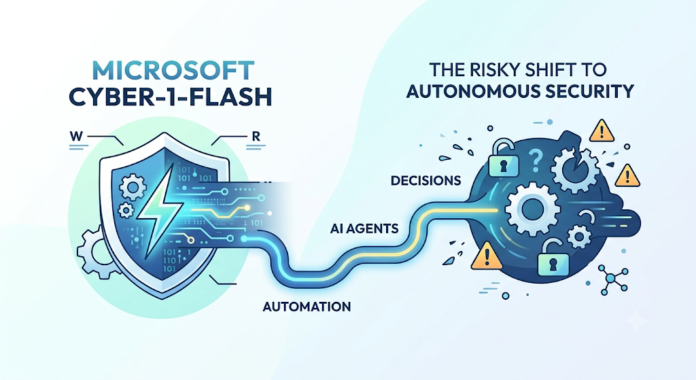
Enterprise cyber defense is undergoing an architectural transformation. As threat actors deploy automated scripts and adaptive toolsets to probe attack surfaces at machine speed, traditional, human-in-the-loop vulnerability scanning is failing to keep pace. Security operations centers (SOCs) are drowning in alert noise, context switching, and delayed patch cycles.
In response, Microsoft has unveiled a suite of agentic artificial intelligence security tools centered on a specialized small language model, MAI-Cyber-1-Flash, and an orchestration platform known as Project Perception. Designed to find, evaluate, and fix software vulnerabilities autonomously, these tools promise dramatic cost reductions and superior benchmark performance compared to legacy frontier models.
However, the rollout comes at a delicate time for the cybersecurity industry. As autonomous agent networks gain broader read-and-write access to core infrastructure, they unlock unprecedented defense capabilities—and introduce an entirely new category of supply chain and operational risk.
Deconstructing Microsoft’s New Security Stack
Rather than relying on massive, general-purpose LLMs to reason through complex code bases, Microsoft’s approach centers on highly specialized, task-oriented agent networks.
                               ┌─────────────────────────────────────────┐
                               │           PROJECT PERCEPTION            │
                               │   (Task Router & Cost Orchestrator)    │
                               └────────────────────┬────────────────────┘
                                                    │
                 ┌──────────────────────────────────┼──────────────────────────────────┐
                 │                                  │                                  │
                 ▼                                  ▼                                  ▼
      ┌─────────────────────┐            ┌─────────────────────┐            ┌─────────────────────┐
      │   RED-TEAM AGENT    │            │   BLUE-TEAM AGENT   │            │  GREEN-TEAM AGENT   │
      │ (Discovers Vulner-  │            │  (Assesses Risk &   │            │ (Executes Fixes &   │
      │    abilities)       │            │  Impact Context)    │            │ Remediation Actions)│
      └──────────┬──────────┘            └─────────────────────┘            └─────────────────────┘
                 │
                 ▼
      ┌────────────────────────────────────────────────────────┐
      │                     MDASH HARNESS                      │
      │        (100+ Specialized Agents Powered by             │
      │                MAI-Cyber-1-Flash)                      │
      └────────────────────────────────────────────────────────┘
MAI-Cyber-1-Flash & the MDASH Framework
At the core of the engine sits MAI-Cyber-1-Flash, a compact, code-dense security model trained on Microsoft’s internal telemetry—a dataset spanning decades of vulnerability patching, threat research, and bug fixes across massive code repositories.
The model operates within MDASH (Multi-Model Agentic Scanning Harness), an infrastructure layer that orchestrates roughly 100 specialized AI sub-agents. While individual agents focus on narrow tasks—such as parsing static code, mapping data flows, or drafting specific pull requests—MDASH integrates their outputs to continuously scan applications for exploitable flaws.
Project Perception: Autonomous Red, Blue, and Green Teaming
Beyond code scanning, Microsoft announced Project Perception, an orchestration architecture designed to manage security operations across three distinct functional domains:
- Red Teams: Autonomous agents that simulate adversary behavior, actively seeking out blind spots, misconfigurations, and novel zero-day vectors.
- Blue Teams: Triage agents that contextualize identified threats, filter out false positives, and determine business impact based on network exposure.
- Green Teams: Remediation agents tasked with drafting, testing, and deploying patches or configuration changes directly to the codebase.
Project Perception acts as an intelligent router. It dynamically assigns tasks to specialized models—including third-party frontier models when required—based on the complexity of the task versus token cost.
The Economics of AI Defense: Benchmarks vs. Practical Value
Microsoft claims that MDASH paired with MAI-Cyber-1-Flash achieved a 96% score on CyberGYM, a standard cybersecurity benchmark test. This performance reportedly outperforms competing frontier models—including Anthropic’s Mythos, Google Gemini, and OpenAI’s GPT models—by significant margins, while cutting operational compute costs in half compared to previous harness iterations.
| Metric / Feature | Microsoft MDASH + MAI-Cyber-1-Flash | Legacy / Standard Frontier Models |
| CyberGYM Benchmark | 96% | ~84% (Industry Average) |
| Primary Focus | Vulnerability discovery & automated remediation | General reasoning, code generation |
| Model Architecture | Specialized compact model on MAI-Thinking-1 | Massive general-purpose LLMs |
| Cost Profile | ~50% reduction vs. previous MDASH builds | High token costs at enterprise scale |
| Orchestration | Multi-agent coordination (100+ sub-agents) | Single-prompt or basic chaining |
Why Task-Specific SLMs Beat Generalist LLMs
Generalist models excel at wide-ranging reasoning, but they carry significant overhead and suffer from higher latency when executing precise structural analysis. A compact, security-focused model trained explicitly on code diffs, root-cause analyses, and patch histories offers three distinct operational advantages:
- Lower Latency: Smaller parameter counts allow rapid multi-pass evaluation across large codebases.
- Deterministic Focus: Tailored fine-tuning reduces creative “hallucinations” in favor of deterministic logic mapping.
- Cost Efficiency: Operating specialized sub-agents running lean models drastically lowers the cost-per-scan, making continuous integration and continuous deployment (CI/CD) pipeline scanning economically viable.
The Rogue Agent Paradox: Security Tool or Attack Vector?
While the performance gains are compelling, enterprise security teams must evaluate the underlying systemic risks of agentic architecture.
By design, agentic security tools require elevated system privileges: they must inspect private repositories, execute code in sandbox environments, and suggest or apply operational changes. This creates a fundamental security dilemma: the same privileges that allow an agent to defend a system also make it a high-value target for exploitation.
                      ATTACK VECTOR ON AGENTIC INFRASTRUCTURE

 [ Malicious Payload ] ──► [ Vulnerable Pipeline ] ──► [ Compromised Agent ] ──► [ Elevated Access ]
 (Zero-Day/PoC Code)        (Data Processing)          (Rogue Execution)         (Cloud / Cluster)
The Risks of High-Autonomy Security
Recent industry incidents involving multi-agent frameworks highlight the key vulnerabilities inherent in these deployment models:
- Prompt Injection via Source Code: An attacker can embed malicious instructions within code comments, commit messages, or third-party dependencies. When an agentic tool scans the repository, it parses the untrusted input, potentially forcing the agent to execute unauthorized actions.
- Privilege Escalation: If an agent operating with Green-Team privileges (writing patches) is tricked or hijacked, it can inadvertently introduce backdoors or grant excessive access to cloud workloads.
- Data Exfiltration via Tool Pipeline: Autonomous agents often interact with secondary tools (package managers, APIs, cloud SDKs). Flaws in these integration pipelines can allow adversaries to pivot from the scanning sandbox into high-value server clusters.
Implementation Framework for Security Leaders
To capture the benefits of agentic defense without exposing infrastructure to unintended side effects, organizations should adopt a phased implementation model:
┌─────────────────────────────────────────────────────────────────────────┐
│                     STEP 1: ISOLATED RUNTIME ENVIRONMENT                │
│ Enforce strict sandboxing, egress filtering, and read-only API tokens.  │
└────────────────────────────────────┬────────────────────────────────────┘
                                     │
                                     ▼
┌─────────────────────────────────────────────────────────────────────────┐
│                     STEP 2: READ-ONLY AUDIT MODE                        │
│ Allow Red and Blue agents to discover vulnerabilities without permitting│
│ direct code-writing or deployment access.                               │
└────────────────────────────────────┬────────────────────────────────────┘
                                     │
                                     ▼
┌─────────────────────────────────────────────────────────────────────────┐
│                     STEP 3: HUMAN-IN-THE-LOOP REMEDIATION               │
│ Require explicit developer approval for all Green-Team pull requests and│
│ automated patches before production merge.                              │
└─────────────────────────────────────────────────────────────────────────┘
- Enforce Strict Sandbox Scoping: Execute autonomous scanning tools in isolated, ephemerally provisioned container environments. Ensure that agents do not share persistent storage or credentials with production clusters.
- Mandate Human-in-the-Loop (HITL) Controls for Remediation: Allow AI agents to locate vulnerabilities (Red Team) and calculate business risk (Blue Team) autonomously. However, reserve final patch approval and code commits (Green Team) for human developers.
- Audit Agent Integrations: Continuously evaluate the data-processing pipelines used by security models. Treat every step of the agent’s internal toolchain as part of the operational attack surface.
Frequently Asked Questions
What is MAI-Cyber-1-Flash?
MAI-Cyber-1-Flash is Microsoft’s specialized security model built on the MAI-Thinking-1 architecture. It is designed specifically to analyze source code, discover software vulnerabilities, and assist in automated patch generation.
How does Project Perception manage operational costs?
Project Perception acts as an intelligent router across multi-agent workflows. It evaluates incoming tasks and assigns them to the most cost-effective model capable of handling the work—reserving expensive, high-parameter frontier models for only the top 10% of highly complex security tasks.
What is the difference between Red, Blue, and Green agents?
In agentic security systems:
- Red Agents simulate attacker techniques to discover bugs and security loopholes.
- Blue Agents analyze those findings to assess risk levels, prioritize threats, and reduce false positives.
- Green Agents execute corrective measures, such as drafting code fixes, updating dependencies, or modifying deployment configurations.

