For a long time, Microsoft’s position in the artificial intelligence race was built on a relatively simple strategy. Invest heavily in OpenAI, bring those models into Azure, push Copilot into every Microsoft product, and let other companies do the foundational research while Microsoft handled the distribution. It was a smart play, and for a while it worked extremely well. But that strategy also had a ceiling. E
very token processed by a third-party model meant part of the economic value flowing outside Microsoft. Every enterprise customer that fell in love with GPT or Claude was building on a foundation that Microsoft did not entirely own or control.
At Microsoft Build 2026 in San Francisco, the company made it clear that era is over. Mustafa Suleyman, the CEO of Microsoft AI, took the stage and announced seven new in-house AI models spanning image generation, voice synthesis, transcription, reasoning, and coding.
These models were not brought in from OpenAI. They were not licensed from Anthropic. They were built by Microsoft’s own MAI research team, trained on commercially clean data, and optimized to run on Microsoft’s own custom silicon. For the first time, Microsoft is not just selling other people’s intelligence. It is building its own.
This document breaks down each of those seven models in detail, explains how they work, what they are designed to do, and what the whole announcement means for developers, enterprises, and the broader AI landscape.
Intelligence is now a function of compute. The scaling laws are clearly holding, and it is a remarkable time in our industry. We at MAI are building towards what we call Humanist Superintelligence.
The Bigger Picture: What Microsoft Is Actually Trying to Build
Before getting into the individual models, it helps to understand the philosophy driving all of this. Suleyman described Microsoft’s overarching goal as Humanist Superintelligence, which he defined as state of the art AI capabilities explicitly designed to serve people and organizations rather than replace them.
That framing might sound like marketing language, but the practical decisions behind it are real and consequential.
Training frontier models requires staggering amounts of compute. Suleyman pointed out that the compute used to train such models has increased by one trillion fold across about fifteen years.
That is twelve orders of magnitude of computational growth. And the scaling laws that govern how more compute translates into better models are still holding. If you add more computation in a consistent, well-organized way, you get predictably better AI.
Microsoft is now investing in that process directly rather than relying on other companies to do it and then licensing the results.
There is also a strategic layer here that goes beyond research ambition. Microsoft invested around thirteen billion dollars in OpenAI and up to five billion dollars in Anthropic. It sells both companies’ models through Azure.
But both OpenAI and Anthropic are now pushing toward major IPOs, which means they are independent businesses with their own investors, their own priorities, and their own long-term interest in not being dependent on Microsoft’s infrastructure. Building its own model stack means Microsoft is developing a genuine alternative before it potentially needs one.
Satya Nadella captured this directly at the conference when he said that the time has come for every company to move from just consuming a frontier model to fully participating at the frontier. That line is aimed at enterprise customers, but it also describes exactly what Microsoft itself is doing.
Microsoft now occupies a genuinely unusual position in the AI industry: investor, partner, distributor, cloud infrastructure provider, and direct competitor to OpenAI and Anthropic simultaneously.
All Seven MAI Models Explained
The seven models Microsoft announced fall across five distinct capability categories: reasoning, coding, image generation, transcription, and voice. Two of the models also have Flash variants, which are smaller and faster versions optimized for cost and latency rather than maximum quality. Here is how every model in the family breaks down.
Model 1: MAI Thinking 1 — The Reasoning Flagship
MAI Thinking 1 is the centerpiece of the entire announcement and the model Microsoft is most clearly betting its independent AI credibility on.
It is a reasoning model, meaning it is designed to work through complex problems step by step rather than simply generating a plausible-sounding response from pattern memory. Reasoning models are the current frontier in AI capability, and every major lab is racing to build better ones.
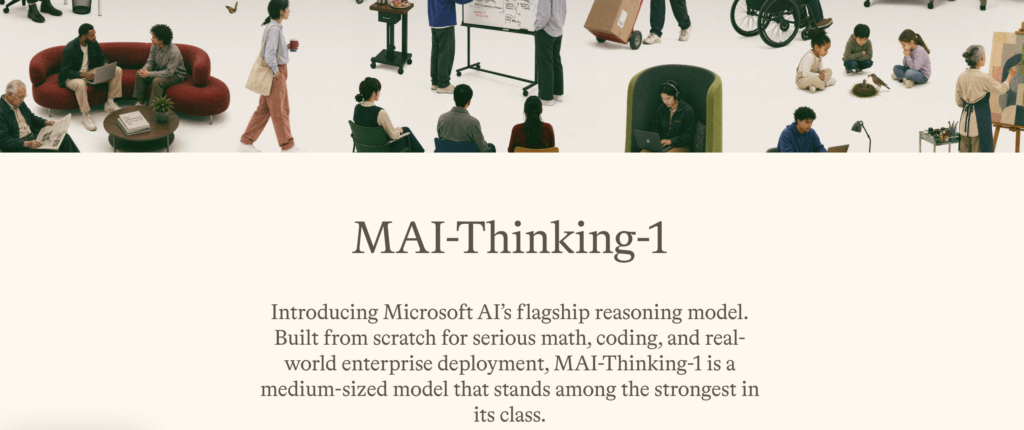
The technical details are genuinely interesting. MAI Thinking 1 is a Mixture of Experts architecture with 35 billion active parameters. Mixture of Experts is a design approach where instead of activating the entire neural network for every query, the model routes each input through a relevant subset of specialized components.
This makes it possible to have a much larger total model while keeping the computational cost of any individual inference manageable. The context window is 256,000 tokens, which means the model can process and reason over extremely long documents or complex codebases in a single pass.
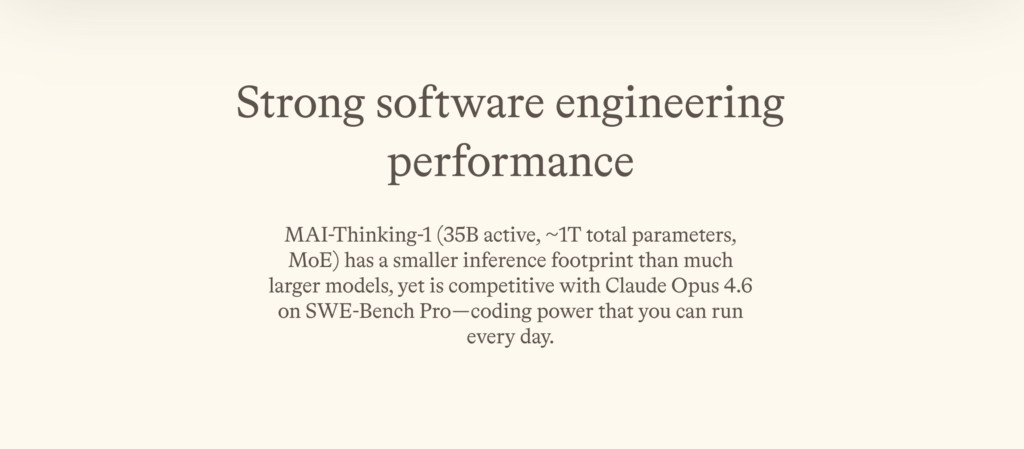
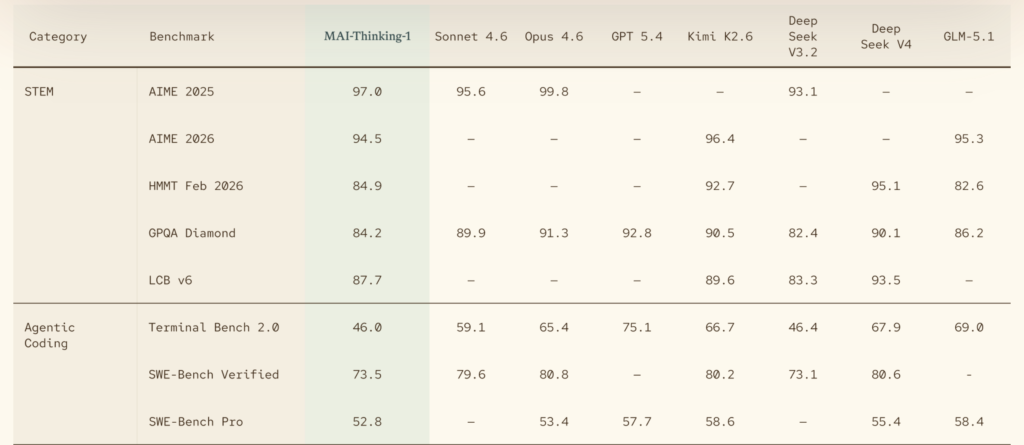
On the benchmark side, Microsoft claims MAI Thinking 1 achieved 97 percent on AIME 2025, which is a widely respected mathematics competition benchmark used to assess general-purpose reasoning ability. More practically relevant for enterprise buyers, the model scored 53 percent on SWE Bench Pro, which is widely considered the toughest real-world coding benchmark available.
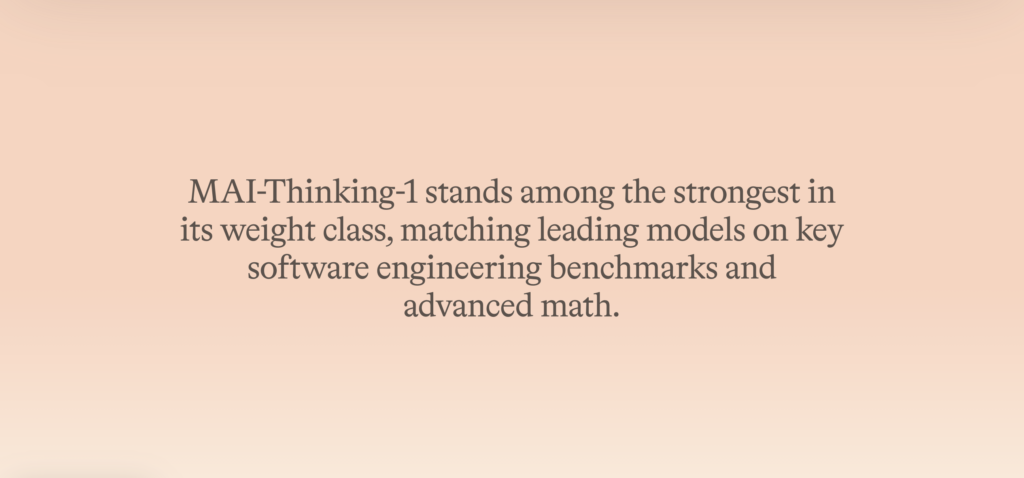
That score puts it alongside Anthropic’s Claude Opus 4.6 on the same benchmark, and Microsoft says independent human evaluators at Surge preferred it over Claude Sonnet 4.6 in side-by-side comparisons.
The detail that Microsoft is emphasizing most heavily, however, is data lineage. MAI Thinking 1 was trained entirely from scratch using commercially licensed data with no distillation from third-party models. Distillation is the practice of training a smaller model by having it mimic the outputs of a larger, more capable model.
It is commonly used to improve performance cheaply. But it also creates legal and commercial entanglement with whatever model was used as the teacher. By avoiding distillation entirely, Microsoft is saying that any enterprise deploying MAI Thinking 1 can do so with complete confidence in the data provenance. That matters enormously in regulated industries like healthcare, finance, and legal services.
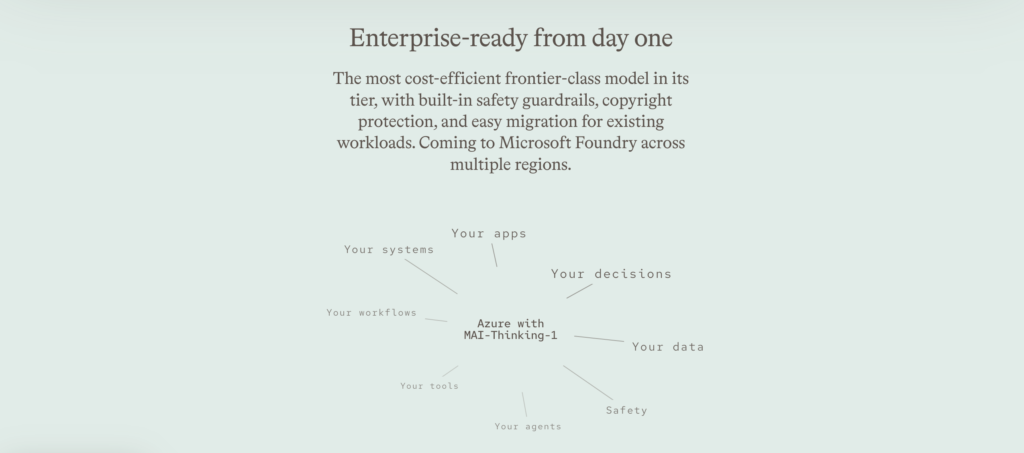
The model is available now in private preview on Microsoft AI Foundry, and a Flash variant has also been released for workloads where speed and cost matter more than maximum reasoning depth.
| Specification | MAI Thinking 1 |
| Model Type | Reasoning model — step-by-step problem solving |
| Architecture | Mixture of Experts (MOE) |
| Active Parameters | 35 billion |
| Context Window | 256,000 tokens |
| AIME 2025 Score | 97 percent |
| SWE Bench Pro Score | 53 percent |
| Training Data | Commercially licensed — zero distillation from third-party models |
| Human Eval (Surge) | Preferred over Claude Sonnet 4.6 in side-by-side testing |
| Availability | Private preview on Microsoft AI Foundry |
| Flash Variant | Yes — optimized for speed and inference cost |
Model 2: MAI Code 1 Flash — The Lightweight Coding Agent
If MAI Thinking 1 is the model for heavy analytical and reasoning work, MAI Code 1 Flash is the model built for the everyday coding workflows that millions of developers use every hour.
It is a coding-specific model with five billion parameters, which puts it in roughly the same size class as Anthropic’s Claude Haiku. Despite that compact footprint, Microsoft claims it achieves 51 percent on SWE Bench Pro, which is a remarkable result for a model of this size.
The deployment story is what makes this model practically significant. MAI Code 1 Flash is rolling out directly inside Visual Studio Code and GitHub Copilot, which are already the two most widely used AI-assisted coding tools in the world.
When Microsoft says this model is being distributed at scale, it means something very different from most AI announcements. Rather than sitting in a research preview that developers have to opt into, this model is being woven into the tools that software engineers open first thing every morning.
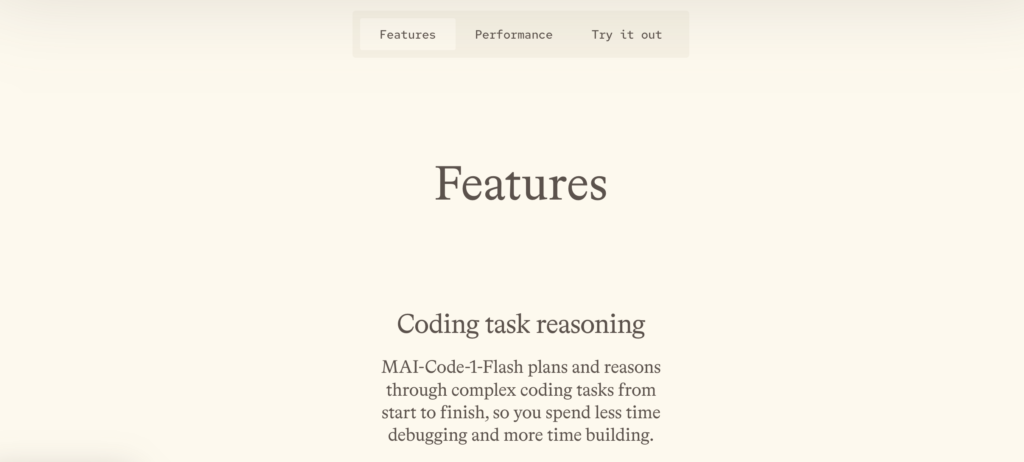
The practical use case is code completion, generation, debugging, and explanation. A developer describes what they want in natural language, or selects broken code and asks for a fix, and MAI Code 1 Flash handles the translation. Because it is smaller and faster than the reasoning model, it can respond almost instantaneously during active coding sessions rather than making the developer wait.
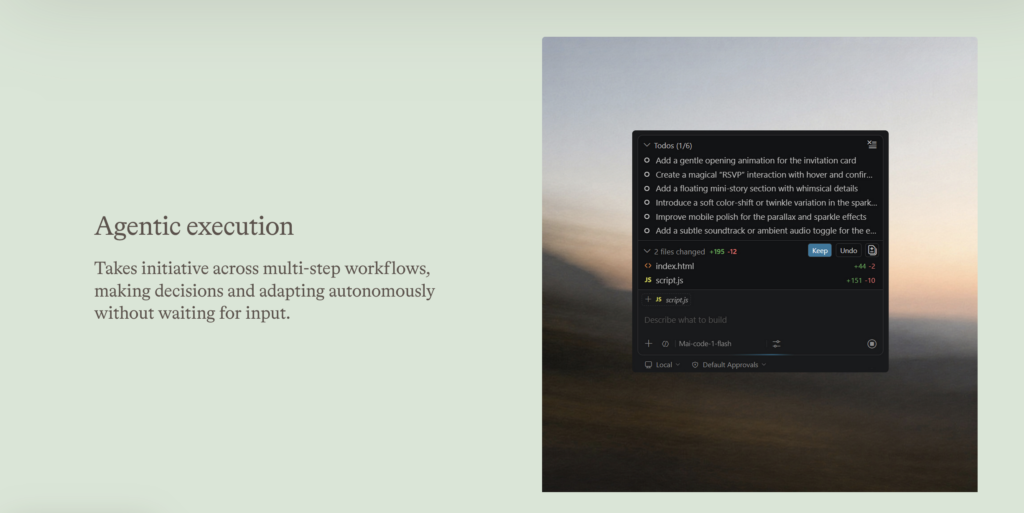
Think of it this way. You are building a web application and need to write a function that fetches user data from an API, handles errors gracefully, and returns a structured response. You describe this in a comment inside VS Code, and the model completes the function. You catch a bug in a callback chain, highlight it, and ask what is wrong. The model identifies the issue and proposes a corrected version. That kind of tight, fast, contextual coding assistance is what MAI Code 1 Flash is designed to deliver.
Model 3 & 4: MAI Image 2.5 and Its Flash Variant — Professional Grade Image Generation
MAI Image 2.5 is Microsoft’s most capable image generation model to date, and at the time of the Build 2026 announcement it claimed the number two position on the Chatbot Arena image editing leaderboard, surpassing models from Google’s Gemini lineup.
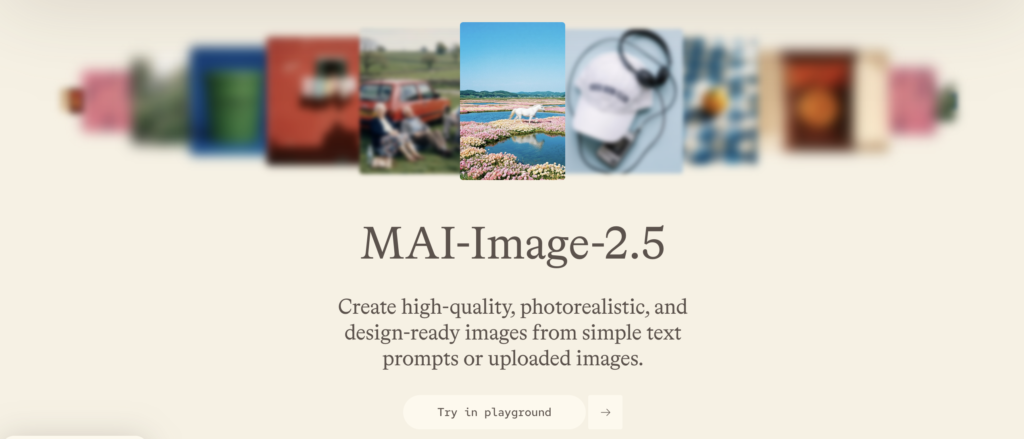
It supports both text-to-image generation, where you describe what you want in plain language and the model renders it, and image-to-image editing, where you provide an existing photo or sketch and ask the model to modify or expand it.
The emphasis here is on precision and consistency. Many image generation models are impressive for creative one-off images but struggle to maintain visual consistency across a series of outputs or to make specific targeted edits without unintended changes spreading to other parts of the image.
MAI Image 2.5 is specifically positioned as solving for that control problem, making it appropriate for professional and production use rather than just experimentation.
Microsoft has already integrated it into PowerPoint, which is the clearest signal of the enterprise use case Microsoft has in mind.

A presentation designer can describe an image concept in natural language, generate multiple options, select the most appropriate one, and place it directly into a slide without leaving the application. The model is also rolling out to OneDrive.
The Flash variant is designed for high-volume production scenarios where you need many images generated quickly and cost-effectively rather than a single image at maximum quality. An e-commerce platform generating product variation images at scale, for example, would use the Flash variant. A design team producing a single hero image for a marketing campaign would use the full 2.5 version.
| Feature | MAI Image 2.5 | MAI Image 2.5 Flash |
| Primary Use Case | Maximum fidelity, professional image generation | High-volume production workloads at lower cost |
| Input Type | Text prompts and image inputs | Text prompts and image inputs |
| Arena ELO Ranking | Number 2 on image editing leaderboard | Optimized for throughput over ranking |
| Current Integration | PowerPoint, rolling out to OneDrive, Foundry | Microsoft AI Foundry |
| Best For | Design teams, marketing materials, creative work | E-commerce, batch generation, automated pipelines |
Model 5: MAI Transcribe 1.5 — The Fastest and Most Accurate Transcription Model Available
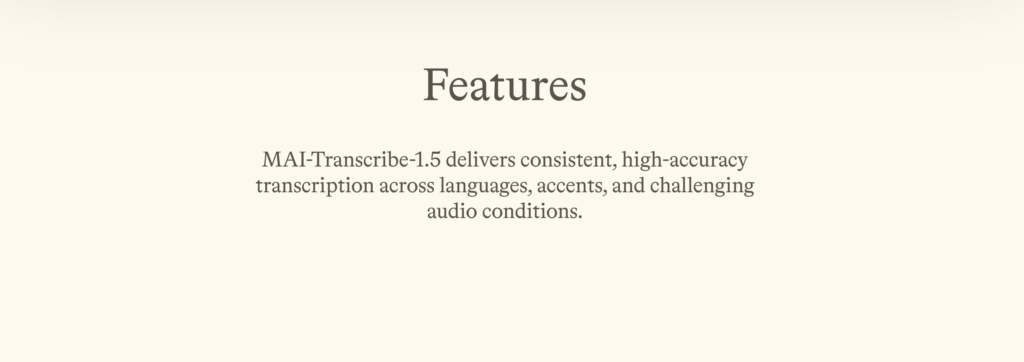
MAI Transcribe 1.5 is Microsoft’s transcription model, and the performance claims here are among the boldest in the entire Build 2026 announcement.
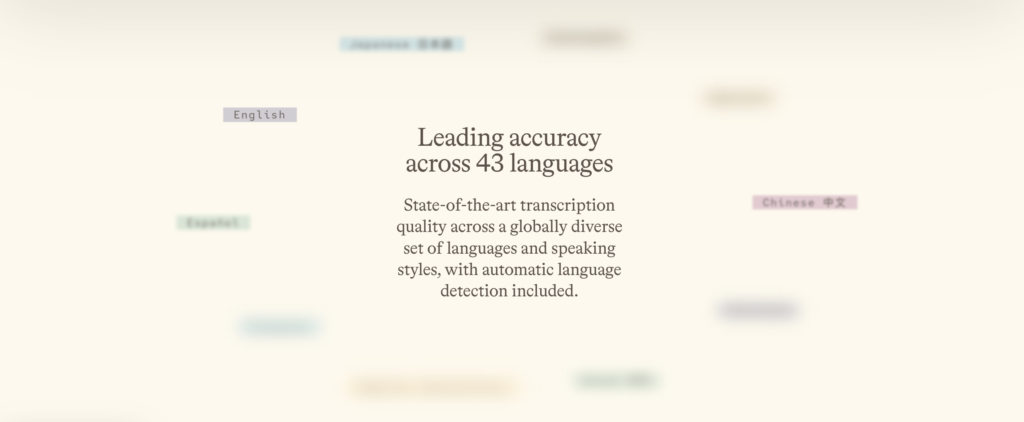
Microsoft says it is the most accurate transcription model in the world across 43 languages, outperforming both Google Gemini and OpenAI’s Whisper-based transcription services on the FLEURS and Artificial Analysis accuracy benchmarks. It also claims to be five times faster than competing transcription models.
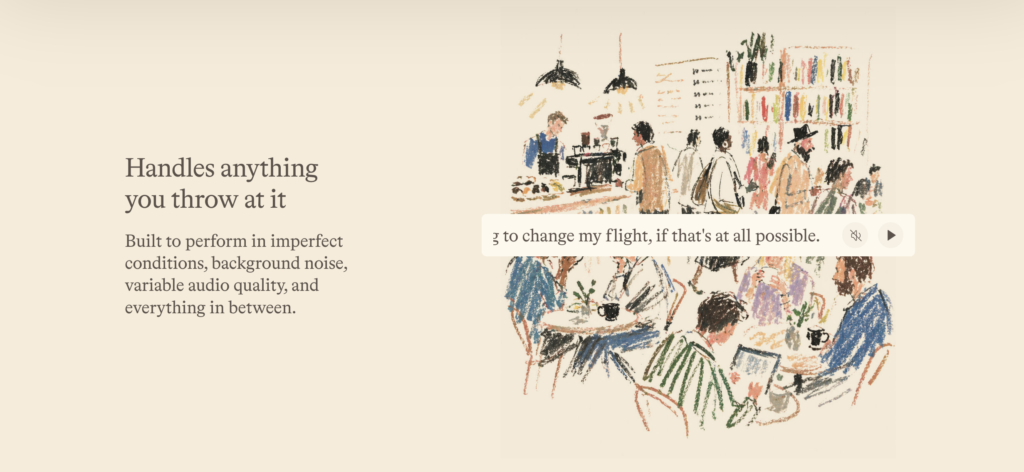
Accuracy in transcription is not just about getting words right. Real-world audio is messy. People speak over each other. There is background noise. Technical jargon appears in unexpected contexts.
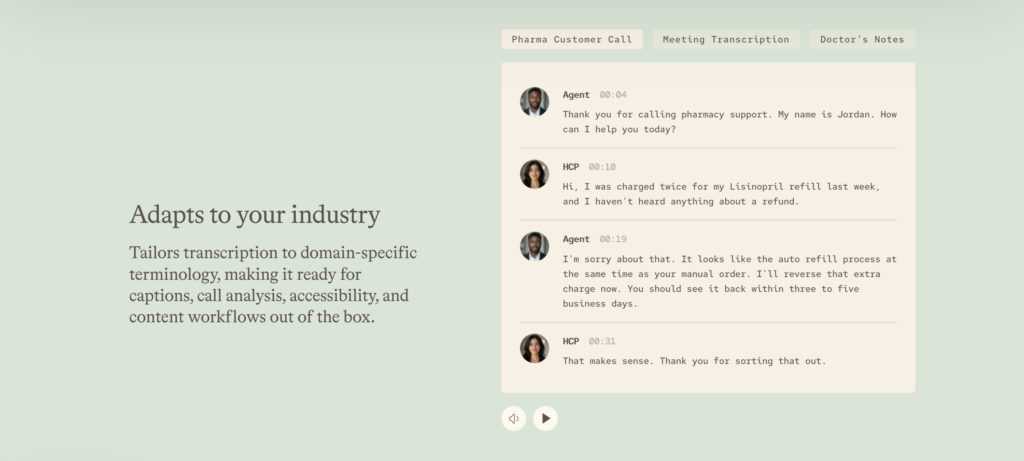
Medical professionals use domain-specific terminology that general-purpose models tend to mishandle. Domain-specific accuracy is precisely what MAI Transcribe 1.5 is optimized for.
The integration path is significant. The model is being built into GitHub, Microsoft Teams, Copilot, and Dynamics 365 Contact Center. The Dynamics 365 integration is particularly interesting because it means the model is going into customer service and call center workflows where transcription accuracy directly affects how well AI can analyze conversations, identify issues, and suggest responses.
A customer calls a support line. The conversation is transcribed in real time. The system identifies the customer’s issue from the transcript, retrieves relevant documentation, and suggests a resolution. All of that downstream intelligence is only as good as the transcription feeding it.
Developers can also access MAI Transcribe 1.5 directly through Microsoft AI Foundry, where Microsoft says it is the most cost-effective transcription service available from any major cloud provider.
| MAI Transcribe 1.5 | Detail |
| Language Support | 43 languages at launch, streaming support coming soon |
| Speed vs Rivals | Five times faster than competing transcription models |
| Benchmark Performance | Leading scores on FLEURS and Artificial Analysis accuracy tests |
| Outperforms | Google Gemini and OpenAI Whisper flagship transcription models |
| Enterprise Integrations | GitHub, Microsoft Teams, Copilot, Dynamics 365 Contact Center |
| Developer Access | Microsoft AI Foundry — most cost-effective hyperscaler option |
| Real-World Strength | Domain-specific accuracy for specialized vocabulary and noisy audio |
Model 6 & 7: MAI Voice 2 and Voice 2 Flash — Natural Sounding Speech That Does Not Degrade Over Time
MAI Voice 2 is Microsoft’s speech generation model, and the key engineering challenge it addresses is one that trips up most text-to-speech systems in real use: degradation over long outputs. Many voice models sound excellent for a few sentences and then gradually drift into an unnatural cadence or lose their emotional coherence.
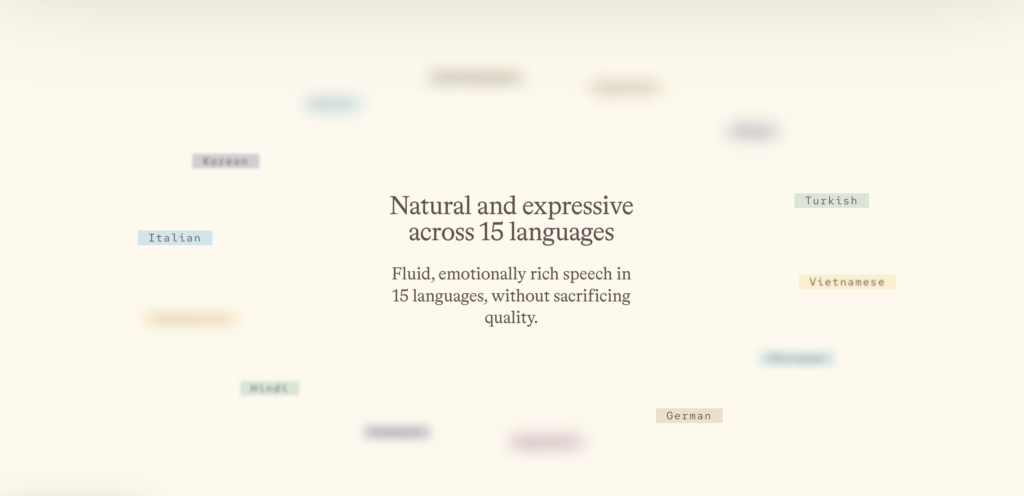
MAI Voice 2 is described as specifically optimized to maintain quality and naturalness across extended generations.
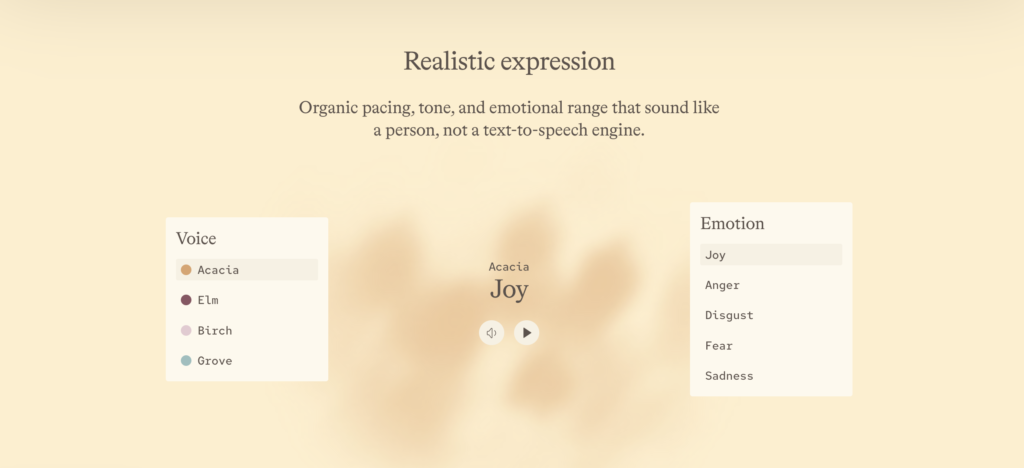
It supports 15 languages at launch with more actively in development. The model offers fine-grained emotional control, which means developers building voice agents can program not just what is said but how it sounds. A customer service agent can be configured to sound warm and patient.
An educational assistant can be tuned to sound encouraging. A news reading service can default to clear and neutral. This kind of control is what makes the difference between a voice interface that people actually enjoy interacting with and one they find irritating after thirty seconds.
Voice 2 Flash is the variant designed for ultra-low latency scenarios, which is the technical challenge at the heart of real-time voice agents. When someone speaks to an AI assistant and expects a near-instant spoken response, every millisecond of latency is felt.
Voice 2 Flash sacrifices some of the expressive quality of the full model to prioritize response speed, which is the right trade-off for live interactive use cases. Both models also include protections against unauthorized voice cloning, and all outputs are watermarked from generation.
Real-world examples where these models become practically important include call center automation where the AI speaks to customers rather than typing responses, accessibility tools that read documents aloud in natural voices for people with visual impairments, language learning applications where hearing natural prosody matters for developing listening comprehension, and voice navigation interfaces in enterprise software.
Microsoft Frontier Tuning: Building Your Own AI on Top of MAI
Alongside the seven models, Microsoft introduced Microsoft Frontier Tuning, which is the system that allows enterprises to take the base MAI models and customize them for specific workflows using their own proprietary data. This is where the business model gets genuinely interesting.
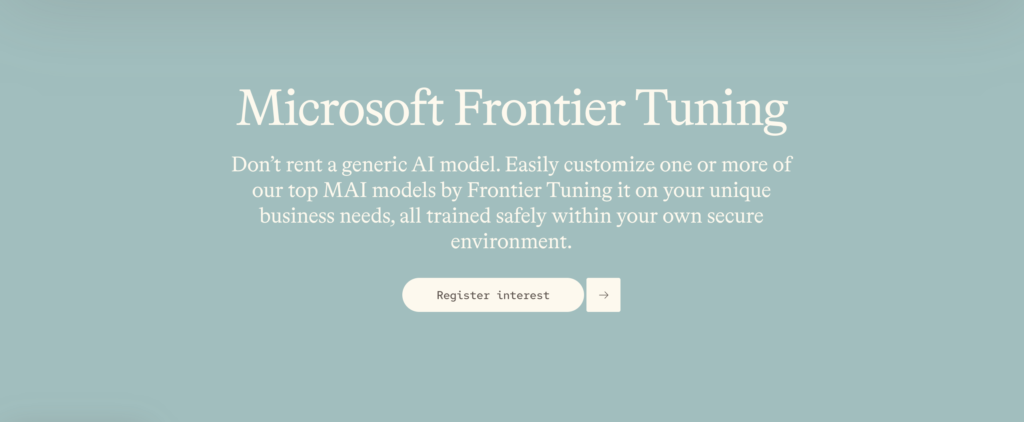
The core mechanism is what Microsoft calls Reinforcement Learning Environments, or RLEs. These are essentially specialized training environments where an enterprise can expose a MAI model to their specific tasks, workflows, and data, and the model learns to perform those tasks at a level that a general-purpose model never could.
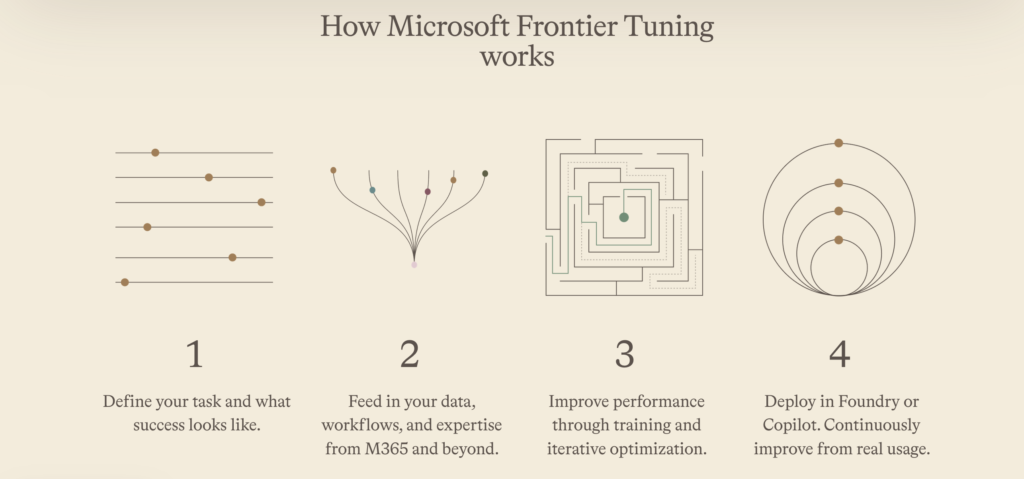
The enterprise does not share this training process with anyone else. The resulting customized model belongs to them. They get all the performance benefits without any of the data leaving their control.
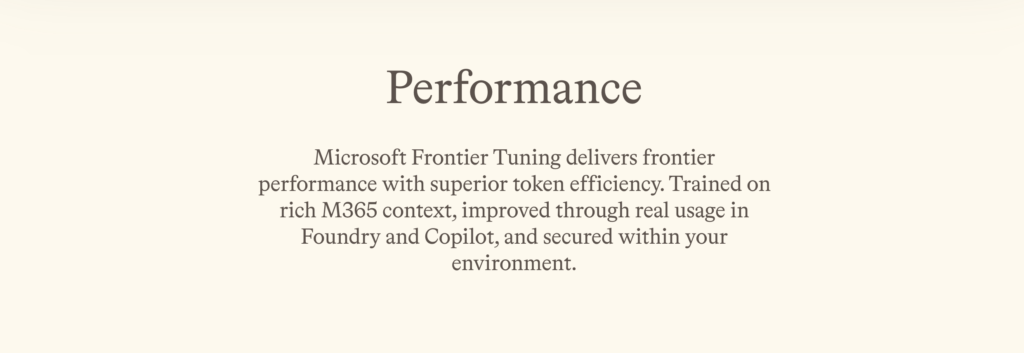
Microsoft provided two concrete examples of what this looks like in practice. For Excel, Microsoft used RLEs to train a MAI model specifically for spreadsheet tasks. The resulting model performs on par with GPT 5.4 on public and private benchmarks for that use case while being ten times more cost-efficient.
For McKinsey, the consulting firm, fine-tuning with Frontier Tuning produced a model that outperformed GPT 5.5 on quality while again achieving roughly ten times better cost efficiency. If those numbers hold up under scrutiny, the value proposition is obvious.
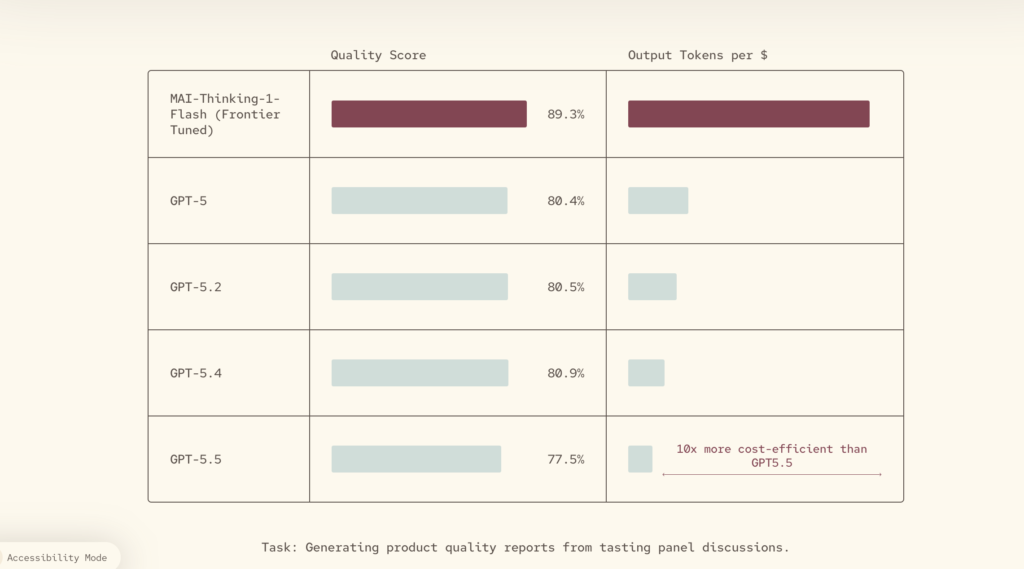
Unlike some AI providers where your data helps improve a shared model that everyone benefits from, with Microsoft Frontier Tuning your workflows and institutional knowledge stay with you. Only your organization keeps the performance gains.
The competitive argument here is significant. One of the subtle concerns enterprises have with some major AI providers is that using their products contributes to training data that improves those models for all users, including competitors. Microsoft is explicitly positioning Frontier Tuning as an alternative where what you build stays yours.
The Silicon Advantage: Microsoft Maia 200 and Co-Design
One aspect of the Build 2026 announcement that deserves attention beyond the individual models is Microsoft’s deliberate integration of software and hardware design. MAI Thinking 1 was optimized specifically for Microsoft’s own Maia 200 chip, which is the company’s custom silicon for AI workloads. Running the MAI models on Maia 200 produces a 1.4 times performance-per-watt improvement compared to equivalent results on other hardware.
At the scale of hyperscale cloud computing, watt efficiency is not a marketing metric. It translates directly into data center costs, cooling requirements, and the economic feasibility of running models at the margins that make commercial services viable. Microsoft’s argument is that by designing the model and the chip together rather than treating them as separate problems, it can extract efficiency gains that a model designed without any hardware awareness cannot match.
These optimized MAI models are also being brought to the N1X, Microsoft’s next-generation consumer AI PC chip, which Satya Nadella mentioned separately at the same conference. The implication is that some level of on-device MAI capability will eventually be available on Windows hardware, which would extend the reach of these models beyond cloud APIs into locally running applications.
What Each Model Actually Looks Like in Daily Use
Benchmark numbers are useful for understanding where models stand relative to each other, but they do not always translate immediately into intuition about how a model feels to use. The following scenarios are meant to illustrate the practical difference each model makes.
A legal team is reviewing a large contract dispute. They upload 200,000 words of contracts, correspondence, and depositions into MAI Thinking 1 and ask it to identify clauses that contradict each other, flag unusual indemnification terms, and outline the strongest counter-arguments available to their client. The reasoning model works through the entire document set systematically rather than guessing from pattern memory, and it produces a structured analysis the legal team can actually act on.
A software engineer at a financial services firm is building a risk calculation engine. She opens VS Code, describes the function she needs in a comment, and MAI Code 1 Flash generates a working implementation in seconds. When the function returns unexpected results during testing, she highlights the problematic section and asks what is wrong. The model identifies a precision error in the floating-point arithmetic and suggests the corrected approach.
A product team at a retail company needs fifty variations of a product image with different backgrounds and lighting conditions for an automated A/B test across their e-commerce platform. They use MAI Image 2.5 Flash to generate all fifty variations from a single base image and a set of prompt variations, a process that would have taken a design team several days and now takes under an hour.
A global customer support team running on Dynamics 365 handles fifty thousand calls a day across twelve languages. MAI Transcribe 1.5 converts every call in real time. The transcripts feed into a downstream model that categorizes issues, identifies sentiment, flags escalation risks, and populates customer records automatically. The team’s supervisors can review a day’s call patterns in twenty minutes rather than sampling calls manually.
A healthcare company is building a patient-facing information service where people can call in and ask questions about their upcoming procedures. The service uses MAI Voice 2 to respond in a warm, natural voice that adapts its tone depending on whether the patient seems anxious or relaxed. Because the voice model maintains quality across extended conversations without drifting into robotic cadence, patients consistently rate the experience as more reassuring than a standard phone tree.
The Healthcare Partnership: Microsoft and Mayo Clinic
The most significant non-model announcement at Build 2026 was Microsoft’s partnership with the Mayo Clinic to co-develop a frontier AI model specifically for healthcare. Mayo Clinic is not just a famous hospital name. It is an institution with decades of longitudinal patient data across genomics, imaging, clinical records, and outcomes, in what Mayo describes as potentially the largest and deepest multimodal longitudinal healthcare dataset in the world.
Suleyman framed the limitation of current AI models in healthcare honestly. The models have read every medical journal and every paper ever published. Their textbook knowledge is extraordinary. What they lack is clinical practice: the specific, hard-won expertise developed through decades of patient care, the pattern recognition that comes from seeing ten thousand variants of the same condition, the judgment that emerges from understanding not just what a diagnosis says but what it means for a specific kind of patient.
The collaboration is aimed at closing that gap. By training on Mayo’s clinical data under the privacy and security frameworks that healthcare requires, Microsoft and Mayo are trying to build a model that functions as something closer to a knowledgeable colleague for physicians rather than a medical search engine. In the near term, this means a clinician could query the model about what is likely to happen next in a patient’s trajectory, what interventions have historically worked for similar cases, and what risks might be developing that current monitoring is not catching.
The longer-term ambition is to make some version of this capability available far beyond Mayo’s walls. Most people in the world will never have access to Mayo Clinic’s level of care. If an AI model trained on that depth of clinical expertise can be deployed in hospitals and clinics globally, the implications for healthcare equity are significant.
Safety, Security, and What Microsoft Is Getting Right About Responsible Deployment
Every major AI announcement now comes with a safety section, and many of them feel perfunctory. Microsoft’s approach at Build 2026 was more specific and more practically oriented than most.
The voice models include built-in protections against unauthorized voice cloning. This is a real and growing concern as voice synthesis improves. Criminals are already using voice synthesis to impersonate executives in phone-based fraud, and the risk only increases as models get better. Watermarking every voice output from generation means that audio produced by MAI Voice can, in principle, be traced back to its artificial origin.
On the enterprise security side, Microsoft introduced a system internally codenamed M Dash, which is a multimodel agentic security framework that deploys more than a hundred AI agents to search for exploitable vulnerabilities in code. These agents reason about data flows, business logic, and potential exploit chains simultaneously, which allows them to find classes of bugs that traditional static analysis tools consistently miss. The system is available through Microsoft’s developer portal and represents an interesting inversion: using AI agents to protect the software that AI agents are increasingly being used to build.
Microsoft also published a detailed technical report alongside the model announcements, which provides an unusually transparent look at how the models were built, evaluated, and safety-tested. This kind of disclosure is important because it allows independent researchers to assess the claims and identify areas where the models may behave unexpectedly in production.
Where This Leaves OpenAI, Anthropic, Google, and the Rest
The competitive implications of Build 2026 are real but not simple. Microsoft is not claiming that MAI models are definitively better than GPT or Claude or Gemini in every category. The claim is more nuanced and arguably more interesting: that at the right price point, on the right task, with the right customization, Microsoft’s own models can compete with or outperform third-party models, while delivering economic efficiency that is simply not available when you are paying wholesale prices for someone else’s intelligence.
OpenAI is the most directly exposed to this shift. Microsoft has been its primary commercial distribution channel and largest investor simultaneously. If Microsoft can route enough enterprise workloads onto MAI models instead of GPT models, it changes the financial relationship significantly. OpenAI still has a massive commercial presence and research reputation, but it loses some of the guaranteed demand that came from being Microsoft’s only option.
Google is facing a different kind of pressure. It has its own frontier models, its own cloud, and its own enterprise customer base. The competitive dynamic there is less about distribution and more about which company can convert model capability into enterprise software most effectively. Microsoft’s advantage is that its models are already inside Outlook, Teams, Word, Excel, PowerPoint, and GitHub. Replacing those would require enterprise customers to switch productivity suites, which almost nobody does.
For Anthropic, the relationship is both commercial and uncertain. Microsoft invested in Anthropic and sells its models through Azure. Anthropic’s models are still available to Azure customers. But the clearer Microsoft’s own model story becomes, the weaker the argument for defaulting to a third-party model when an equivalent or cheaper in-house option exists.
A Reference Table: All Seven MAI Models at a Glance
| Model | Category | Key Capability | Where It Is Deployed |
| MAI Thinking 1 | Reasoning | Complex reasoning, coding, 35B MOE, 97% AIME, 53% SWE Bench Pro | Microsoft AI Foundry (private preview) |
| MAI Thinking 1 Flash | Reasoning (fast) | Speed-optimized version of Thinking 1 for lower cost | Microsoft AI Foundry |
| MAI Code 1 Flash | Coding | 5B parameter coding model, 51% SWE Bench Pro, natural language to code | VS Code, GitHub Copilot, AI Foundry |
| MAI Image 2.5 | Image Generation | Text and image prompts to images, No.2 on Arena ELO image editing | PowerPoint, OneDrive, AI Foundry |
| MAI Image 2.5 Flash | Image Generation (fast) | High-volume production image generation at lower cost | Microsoft AI Foundry |
| MAI Transcribe 1.5 | Transcription | 43 languages, 5x faster than rivals, No.1 accuracy on FLEURS | Teams, GitHub, Copilot, Dynamics 365, Foundry |
| MAI Voice 2 | Speech Synthesis | 15+ languages, expressive prosody, consistent quality at length | Enterprise voice agents, applications |
| MAI Voice 2 Flash | Speech Synthesis (fast) | Ultra-low latency for real-time interactive voice agents | Live voice assistant applications |
Final Thoughts: Is This the Moment Microsoft Takes Real Ownership of the AI Stack?
Microsoft Build 2026 was not the announcement of a single breakthrough model. It was something more strategically significant: a coherent declaration that Microsoft is now a full-stack AI company with its own foundational research, its own models across multiple capability domains, its own silicon, its own enterprise customization platform, and its own distribution across products that hundreds of millions of people use every day.
Whether the MAI models live up to all the performance claims made at Build will become clear over the coming months as developers and enterprises actually put them into production. Benchmarks are useful proxies, but real-world performance across the messy diversity of actual enterprise use cases is what ultimately determines whether a model earns trust.What is already clear is the direction. Microsoft is not content to be the company that distributes other people’s intelligence. It wants to build the intelligence itself, optimize it for its own hardware, customize it for each enterprise’s specific needs, and capture the full economic value of that stack from the chip upward to the application. Build 2026 was the most explicit public statement yet that this transformation is no longer just a strategy. It is underway.
Microsoft MAI Models Comparison Table
| Model | Category | Primary Purpose | Key Strength | Best Use Cases |
|---|---|---|---|---|
| MAI Thinking 1 | Reasoning AI | Complex problem solving and advanced reasoning | 35B parameter Mixture of Experts architecture with strong benchmark performance | Research, analytics, legal review, enterprise decision making, software engineering |
| MAI Thinking 1 Flash | Fast Reasoning AI | Cost-efficient reasoning and analysis | Faster responses with lower inference costs | Business automation, AI assistants, large-scale deployments |
| MAI Code 1 Flash | Coding AI | Code generation and debugging | Built for GitHub Copilot and VS Code workflows | Software development, code reviews, debugging, documentation |
| MAI Image 2.5 | Image Generation AI | High-quality image creation and editing | Strong image editing and design performance | Marketing creatives, presentations, advertising, branding |
| MAI Image 2.5 Flash | Fast Image Generation AI | High-volume image production | Faster generation with lower costs | E-commerce, bulk content creation, social media assets |
| MAI Transcribe 1.5 | Speech-to-Text AI | Audio transcription and speech recognition | Supports 43 languages with high accuracy | Meetings, podcasts, customer support, call centers |
| MAI Voice 2 | Text-to-Speech AI | Natural voice generation | Human-like speech with emotional control | Voice assistants, accessibility, education, customer service |
| MAI Voice 2 Flash | Real-Time Voice AI | Low-latency voice conversations | Optimized for instant voice responses | AI agents, voice bots, real-time customer interactions |
| Microsoft Frontier Tuning | Custom AI Platform | Enterprise model customization | Private model fine-tuning using company data | Enterprise AI, healthcare, finance, consulting, internal copilots |
FAQs: Microsoft MAI Models, Features, Use Cases, Pricing, and AI Strategy
1. What are Microsoft MAI models?
Microsoft MAI models are Microsoft’s new family of in-house artificial intelligence models announced at Build 2026. They cover reasoning, coding, image generation, voice synthesis, transcription, and enterprise AI customization.
2. How many MAI models did Microsoft launch?
Microsoft launched seven major MAI models, including MAI Thinking 1, MAI Thinking 1 Flash, MAI Code 1 Flash, MAI Image 2.5, MAI Image 2.5 Flash, MAI Transcribe 1.5, MAI Voice 2, and MAI Voice 2 Flash.
3. What is MAI Thinking 1?
MAI Thinking 1 is Microsoft’s flagship reasoning model designed for complex problem-solving, coding, mathematical reasoning, enterprise analysis, and long-context understanding.
4. Is MAI Thinking 1 competing with GPT and Claude?
Yes. Microsoft positions MAI Thinking 1 as a direct competitor to advanced reasoning models from OpenAI, Anthropic, and Google.
5. What makes MAI Thinking 1 different from other AI models?
Microsoft claims the model was trained using commercially licensed data and does not rely on third-party model distillation, making it attractive for enterprise and regulated industries.
6. What is MAI Code 1 Flash used for?
MAI Code 1 Flash is a coding-focused AI model built to help developers write, debug, explain, and optimize code directly inside GitHub Copilot and Visual Studio Code.
7. Can MAI Code 1 Flash replace software developers?
No. It is designed as a productivity assistant that accelerates development rather than replacing software engineers.
8. What is MAI Image 2.5?
MAI Image 2.5 is Microsoft’s advanced image generation and image editing model capable of creating high-quality visuals from text prompts or existing images.
9. How does MAI Image 2.5 compare with Midjourney and Gemini?
Microsoft claims MAI Image 2.5 achieved one of the highest image editing rankings on industry leaderboards and competes with leading image-generation models.
10. What is the difference between MAI Image 2.5 and MAI Image 2.5 Flash?
MAI Image 2.5 focuses on maximum image quality, while MAI Image 2.5 Flash prioritizes speed and cost efficiency for large-scale image generation.
11. What is MAI Transcribe 1.5?
MAI Transcribe 1.5 is Microsoft’s speech-to-text model designed for highly accurate transcription across multiple languages and noisy environments.
12. How many languages does MAI Transcribe 1.5 support?
Microsoft states that MAI Transcribe 1.5 supports 43 languages and is optimized for enterprise-grade transcription tasks.
13. What is MAI Voice 2?
MAI Voice 2 is Microsoft’s text-to-speech model that generates natural, expressive, and human-like voices for AI assistants and enterprise applications.
14. What is MAI Voice 2 Flash?
MAI Voice 2 Flash is a low-latency version of MAI Voice 2 designed for real-time AI conversations and voice assistants.
15. What is Microsoft Frontier Tuning?
Microsoft Frontier Tuning allows organizations to customize MAI models using their own proprietary data while maintaining privacy, security, and control.
16. Will Microsoft stop using OpenAI models?
No. Microsoft continues to partner with OpenAI while simultaneously developing its own MAI models. Both strategies are expected to coexist.
17. Are MAI models available in Azure AI Foundry?
Yes. Several MAI models are being deployed through Microsoft AI Foundry and Azure services for developers and enterprises.
18. What industries can benefit from MAI models?
Healthcare, finance, consulting, education, software development, customer support, marketing, legal services, and enterprise operations can all benefit from MAI models.
19. What is Microsoft’s Humanist Superintelligence vision?
Humanist Superintelligence is Microsoft’s approach to developing advanced AI systems that amplify human capabilities rather than replacing human decision-making.
20. Why are Microsoft MAI models important for the future of AI?
The MAI model family marks Microsoft’s transition from primarily distributing third-party AI models to becoming a full-stack AI company with its own models, infrastructure, chips, and enterprise AI ecosystem.

