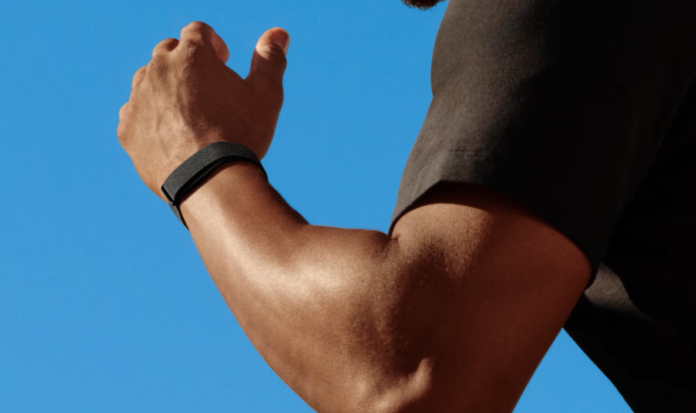
The wearable fitness market has just become significantly more competitive. Google has officially introduced the new Fitbit Air, a lightweight screenless fitness tracker designed to rival premium recovery-focused wearables like WHOOP. With a starting price of just $99 and no mandatory subscription, Fitbit Air could disrupt a category that has long been dominated by subscription-first devices.
For years, WHOOP has been the go-to wearable for athletes, runners, and performance-focused users who want detailed insights into sleep, recovery, strain, and heart rate variability. However, its recurring membership fee and premium pricing have been barriers for many users.
Google Enters the Screenless Wearable Arena
The fitness wearable market just got a major shakeup. Google has officially announced its latest entry into the health and activity tracking space with the brand-new Fitbit Air, and this is not just another incremental upgrade to an existing product line. This is a full-on strategic move by one of the most powerful technology companies in the world, designed specifically to go head-to-head with the dominant screenless wearable on the market: the WHOOP 4.0.
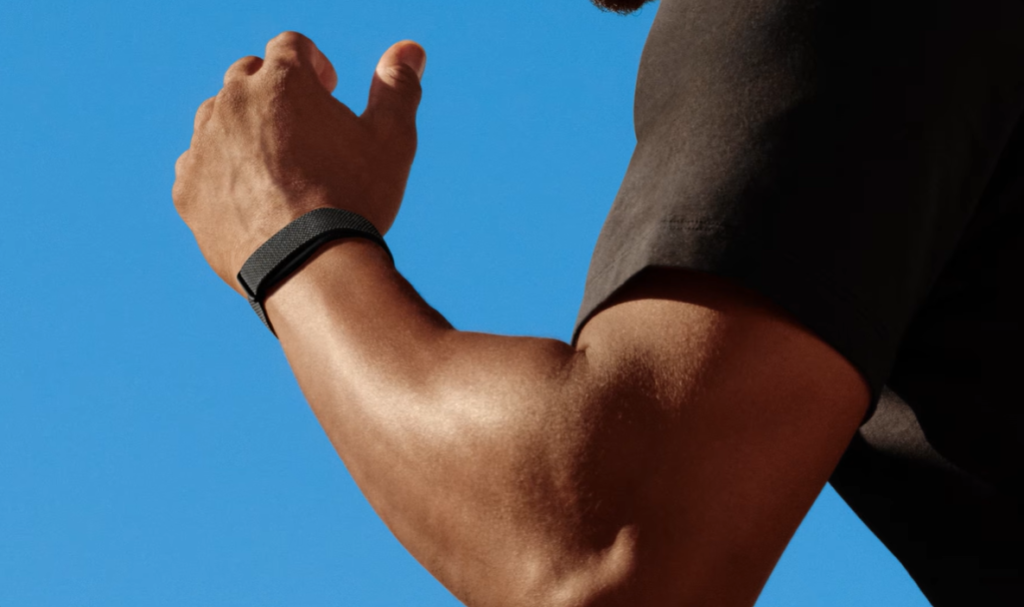
The screenless fitness tracker category has been quietly growing for years. Devices like the WHOOP band, the Polar Loop, and the Amazfit Helio have carved out a loyal niche among athletes, biohackers, and health-conscious individuals who want continuous, all-day health monitoring without the bulk, distraction, or battery drain of a traditional smartwatch. These users prioritize data accuracy, comfortable sleep tracking, and a seamless, always-on experience over notification management or app browsing from the wrist.
Until now, WHOOP has largely owned this space. With its subscription-based model, military-grade accuracy, and world-class app, WHOOP has built a passionate community around strain, recovery, and sleep data. But Google is arriving with something that could genuinely disrupt that dominance. The Fitbit Air is priced at just $99, requires no mandatory subscription, comes backed by Google’s artificial intelligence and health ecosystems, and is designed to integrate seamlessly with the broader universe of Google devices and third-party wearables.
In this comprehensive blog post, we will take an in-depth look at everything you need to know about the Google Fitbit Air, covering its design and hardware, sensors, software, the new Google Health app, pricing, and subscription model. We will then examine the WHOOP 4.0 in detail and ultimately build a full comparison between the two devices to help you decide which one is right for you.
Part One: Google Fitbit Air — A Deep Dive
1. Background and Announcement
Google’s Fitbit Air was unveiled alongside a major rebranding of the Fitbit app into what is now being called the Google Health app. The Google Health app officially rolled out on May 19th, with the Fitbit Air becoming available for purchase on May 26th, 2025. Together, these two products form a tightly integrated ecosystem: the Air collects your health and activity data around the clock, while the app serves as the command center where all of that data is visualized, analyzed, and acted upon.
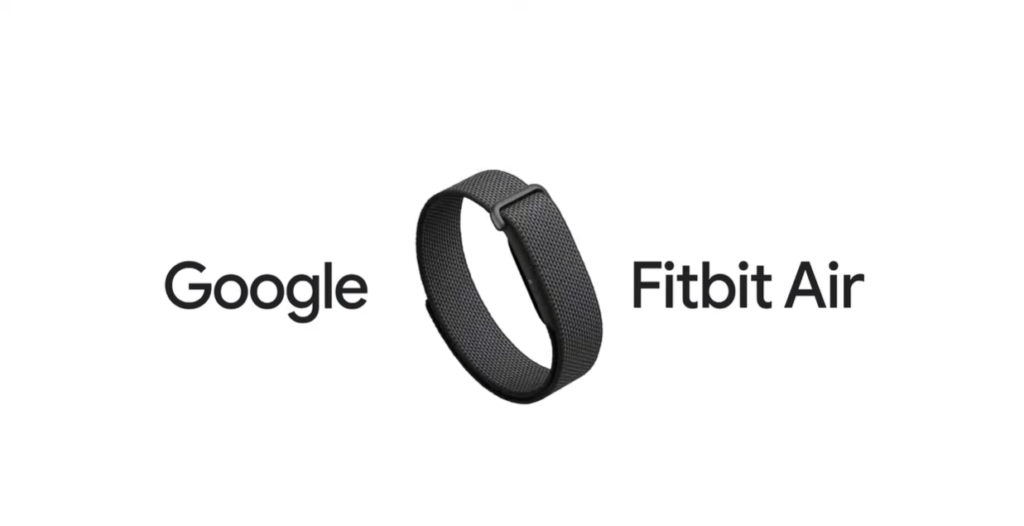
This announcement is significant for several reasons. Google is taking the form factor that WHOOP popularized — a small, screenless, always-on health monitor — and pairing it with the power of its AI ecosystem, the trust of the Fitbit brand, and a price point that is dramatically more accessible than WHOOP’s ongoing subscription model. It represents a clear statement of intent: Google is serious about health tracking, and it wants to be the central hub for your health data regardless of which devices you use.
2. Design, Form Factor, and Build Quality
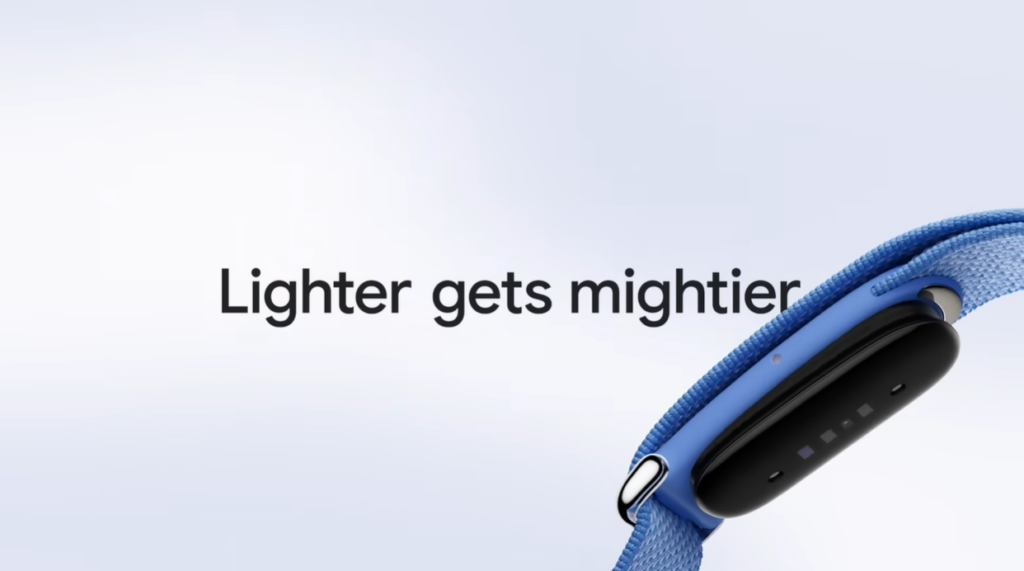
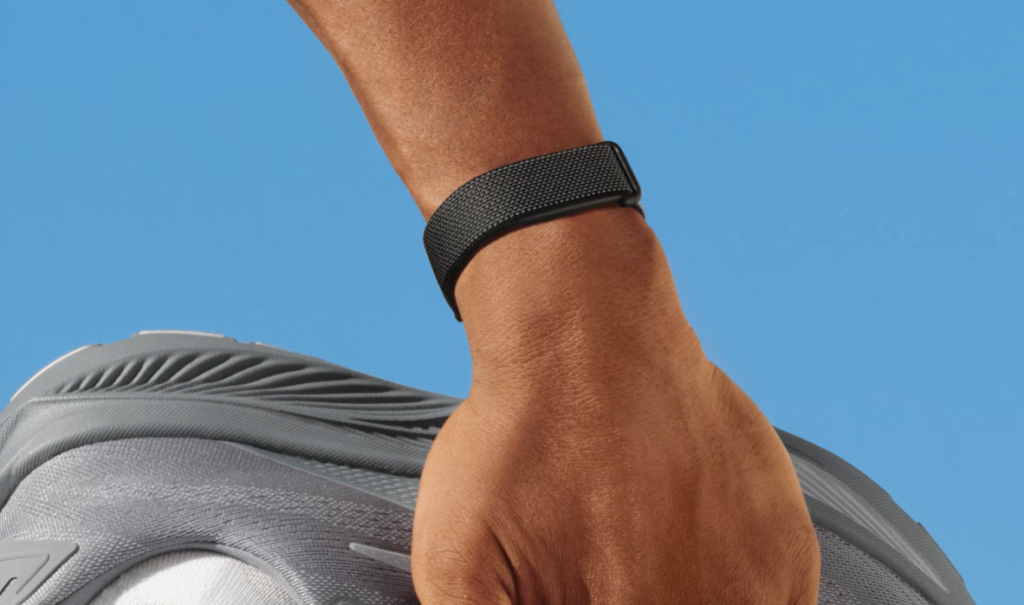
The Fitbit Air is built around the concept of minimalist, purposeful hardware. Like the WHOOP 4.0, it has no screen at all. Instead, it consists of a small, compact pod or puck — roughly the size of a large button — that houses all the sensors and electronics. This pod snaps into a flexible band that wraps around the wrist, making the entire assembly extremely lightweight and low-profile.

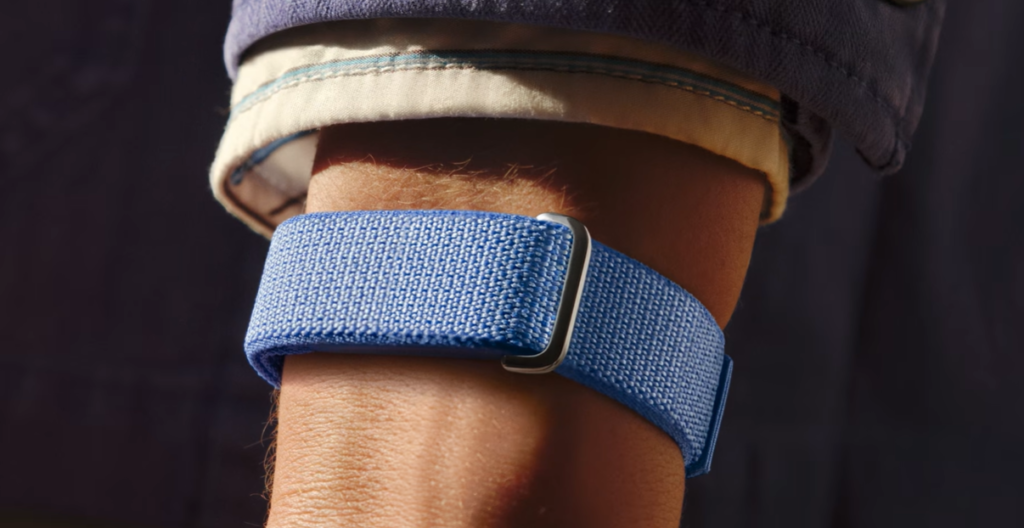
Google has placed the Fitbit Air in a size category slightly smaller than its existing Fitbit Inspire and Fitbit Lux trackers, making it one of the most compact wearables it has ever produced. The overall weight with the band is a mere 12 grams, and without the band the pod itself is just 5.2 grams. To put that into perspective, most traditional smartwatches weigh anywhere from 30 to 50 grams, making the Fitbit Air feel almost invisible on the wrist.
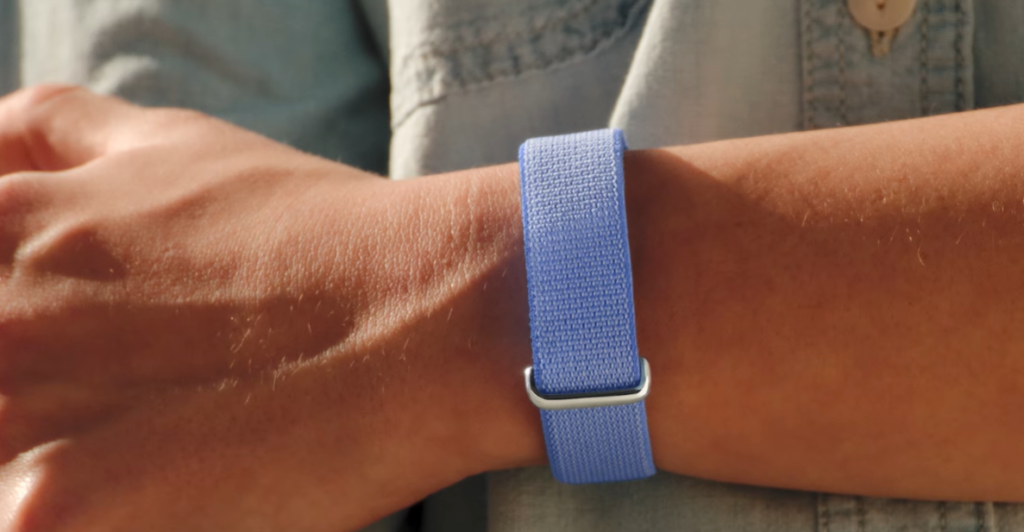
The build is constructed from recycled polycarbonate and PBT plastics, which keeps the weight down while still providing a durable, scratch-resistant exterior. The thickness of the pod is just 8.3 millimeters, meaning it sits remarkably flat against the wrist and does not catch on sleeves or bedsheets during sleep. The strap is made from a textile material with a stainless steel buckle, offering both comfort and durability across different activity types.
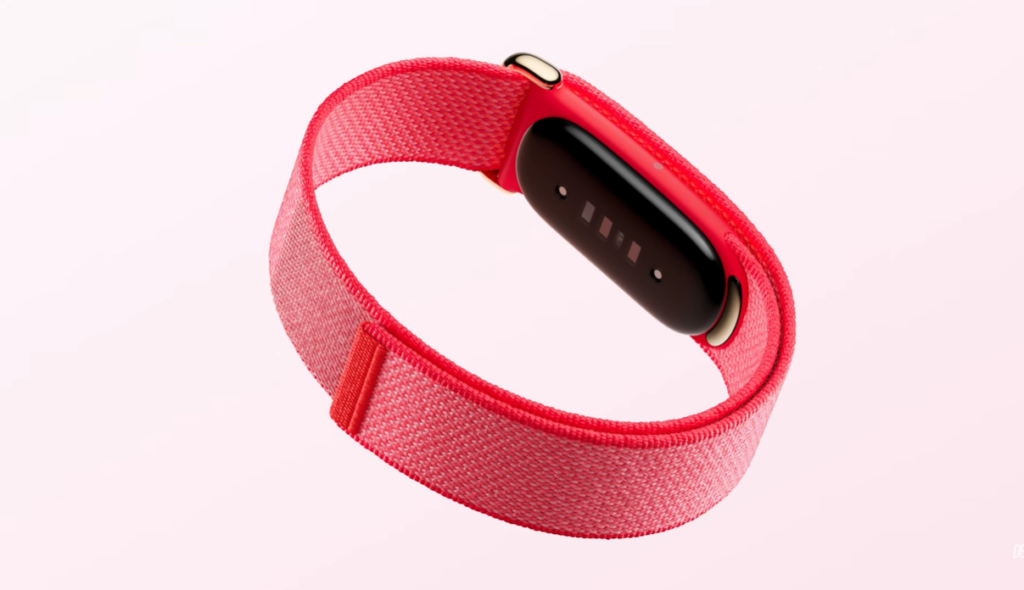
Google is offering the Fitbit Air in three distinct band styles at launch: Active Bands, Elevated Bands, and Performance Bands. Each style comes in multiple colorways, and users can swap the pod between different bands depending on the occasion. There is even a special edition Steph Curry collaboration band that will be available for those who want a celebrity-inspired look. Additional third-party bands are expected to appear on platforms like Amazon shortly after launch, given the standard pod design.
One notable omission at launch is the absence of a bicep or upper arm band, which WHOOP supports and which is preferred by some athletes, particularly those who find wrist-based tracking less comfortable during heavy lifting or who use chalk that can interfere with sensors. Google has acknowledged this gap and indicated a possible expansion of band options later in the year. However, given the universal band connector design, it is widely expected that third-party manufacturers will fill this gap quickly.
Fitbit Air Physical Specifications
| Specification | Detail |
| Weight (with band) | 12 g |
| Weight (pod only) | 5.2 g |
| Thickness | 8.3 mm |
| Build Material | Recycled polycarbonate and PBT plastics |
| Strap Material | Textile with stainless steel buckle |
| Water Resistance | 50 meters (5 ATM) |
| Scratch Resistance | Yes |
| Shape | Rectangle |
| Screen | None (Screenless) |
| Available Band Styles | Active, Elevated, Performance |
| Special Editions | Steph Curry Collaboration Band |
3. Sensors and Health Tracking Capabilities
Despite its compact size, the Fitbit Air is packed with a comprehensive suite of health sensors. Google has not cut corners on the hardware side, and the sensor array is designed to match or exceed what was previously available on the Fitbit Charge 6, while incorporating newer-generation components that should deliver slightly improved accuracy.
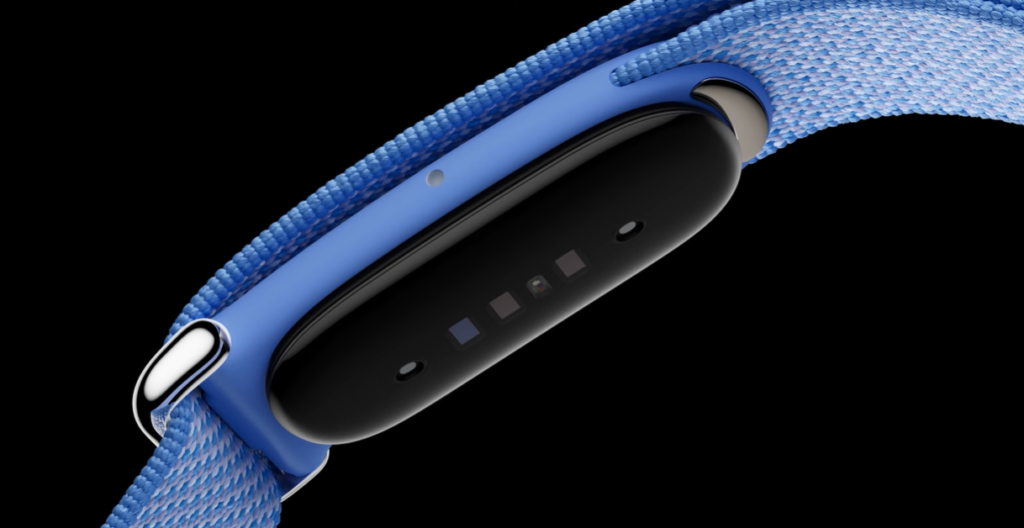
The optical heart rate sensor sits on the underside of the pod and uses photoplethysmography (PPG) technology to measure your heart rate continuously throughout the day and night. This same sensor is also used for blood oxygen saturation (SpO2) monitoring. The device includes a skin temperature sensor, which can detect small variations in body temperature overnight that correlate with illness, cycle tracking, and recovery status. Heart rate variability (HRV) is measured during sleep and is one of the most important metrics for recovery assessment.
Perhaps the most notable health feature from a clinical standpoint is the inclusion of FDA-approved background atrial fibrillation (AFib) detection. This is a passive feature that monitors your heart rhythm throughout the day without requiring you to hold a position or perform a dedicated test. If an irregular rhythm is detected, the app will notify you. It is worth noting that the Fitbit Air does not support manual ECG recording — you cannot initiate an on-demand electrocardiogram the way you can on an Apple Watch Series 9 or Fitbit Sense 2 — but the background passive detection is arguably more practical for everyday users since it monitors continuously rather than only when you remember to take a reading.
The device includes a vibration motor, which serves multiple purposes: it can buzz for alarms, trigger smart wake functionality during sleep, and alert you to low battery. A small LED indicator light provides visual feedback for battery status and Bluetooth pairing.
Fitbit Air Sensor Summary
| Sensor / Feature | Available | Notes |
| Optical Heart Rate Monitor | Yes | Continuous 24/7 tracking |
| Blood Oxygen (SpO2) | Yes | Measured during sleep and on demand |
| Skin Temperature | Yes | Overnight trend monitoring |
| Heart Rate Variability (HRV) | Yes | Measured during sleep |
| AFib Detection (Background) | Yes | FDA approved, passive monitoring |
| Manual ECG | No | Not supported at launch |
| GPS | No | Connected GPS via phone |
| Barometric Altimeter | No | Available on Pixel Watch only |
| Vibration Motor | Yes | Alarms, smart wake, notifications |
| LED Indicator | Yes | Battery and pairing status |
| Accelerometer / Motion | Yes | Step counting, auto exercise detection |
| Calorie Tracking | Yes | All-day calorie burn estimation |
4. Battery Life and Charging
Battery life is one of the most critical metrics for a screenless tracker, because the whole appeal of this category is the ability to wear it 24 hours a day, seven days a week without thinking about it. Google claims approximately seven days of battery life on a single charge, which is in line with industry expectations for a device of this size and sensor complexity.
Charging is handled via a small magnetic charging puck that attaches to the back of the pod. A full charge from empty to 100 percent takes approximately 90 minutes, which is reasonable. The standout feature here is the fast-charging capability: just five minutes of charging is enough to power the device for a full 24-hour day. This is particularly useful if you forget to charge overnight and want to make sure your sleep data is captured without interruption.
The device can also store data locally without needing to sync to your phone — up to seven days of general activity data can be held onboard, and up to one full day of detailed workout data. This means you can go camping, travel, or be in areas with poor connectivity and still have your health data captured and ready to sync when you return to phone range.
5. Automatic Exercise and Activity Tracking
One of the defining features of any screenless wearable is its ability to automatically detect and log workouts without requiring the user to press any buttons. This is perhaps the most important thing that distinguishes this category from basic step counters or traditional smartwatches. The Fitbit Air supports automatic exercise detection, meaning you can simply go for a run, hop on your bike, or start a workout session and the device will detect that activity in the background, log it, and tag it with the appropriate activity type.
At launch, the Fitbit Air supports automatic recognition for a defined list of exercise types. While this list is smaller than WHOOP’s extensive catalog — which can distinguish between mountain biking and road cycling, for example — Google has implemented a machine learning layer that allows the device to improve its activity recognition over time. If you regularly go mountain biking on Saturday mornings and the device initially logs it as a generic outdoor ride, you can correct it in the app, and the system will gradually learn that your Saturday morning sessions should be classified as mountain bike rides. Over several weeks of use, the accuracy of activity labeling is expected to improve significantly.
For users who prefer more precise workout tracking, the app also allows you to manually start a tracked session directly from your phone. In this mode, the app displays your real-time heart rate data mirrored from the Air, and it uses your phone’s GPS to capture distance, route maps, and location data. This GPS-connected workout data can then be synced to third-party platforms like Strava, with heart rate data from the Air automatically merged with the GPS track.
Strength training is handled somewhat differently. The Fitbit Air does not perform automatic rep counting, which is a feature available on some more advanced smartwatches. However, you can manually log your strength sessions to the Google Health Coach, telling it what exercises you performed, how many sets and reps, and at what weight, and the coach will add this information to your workout log for tracking over time.
6. Sleep Tracking and Recovery
Sleep tracking is where screenless wearables truly shine over traditional smartwatches, and it is a core use case that Google has leaned into heavily with the Fitbit Air. The compact, lightweight form factor means that the device barely registers on the wrist during sleep, making it far more comfortable than wearing a full smartwatch through the night. This is particularly important for side sleepers, who often find the bulk and hard edges of a smartwatch uncomfortable when sleeping on the relevant arm.
The Fitbit Air tracks all major sleep metrics: total sleep time, sleep stages (light, deep, and REM), sleep efficiency, time to fall asleep, and number of awakenings throughout the night. It uses the combination of heart rate, HRV, movement, and SpO2 data to build a comprehensive picture of your sleep quality. Google has also announced an algorithmic improvement that increases sleep tracking accuracy by approximately 15 percent compared to previous Fitbit generations, particularly for sleep stage classification. Importantly, this improvement is at the software level and has been rolled out across all Google and Fitbit devices, including the Pixel Watch lineup.
The smart wake alarm is another practical feature worth highlighting. Rather than waking you at a fixed time, the smart alarm monitors your sleep stage in the final window before your desired wake time and triggers the vibration motor during a period of lighter sleep. This is designed to reduce sleep inertia — that groggy, disoriented feeling you get when an alarm yanks you out of deep sleep — resulting in a more natural and refreshing wake-up experience.
The Air can also be used in a complementary fashion with other devices for sleep tracking. If you wear a Pixel Watch during the day for its smartwatch features, you can switch to the Fitbit Air at night for more comfortable sleep monitoring, and all data will be merged seamlessly in the Google Health app. The app allows you to set device priority so that it always knows which device to use as the source of truth for sleep data versus workout data.
7. The Google Health App
If the hardware is the engine, the Google Health app is the dashboard, and in the world of screenless wearables, the app experience is arguably more important than the physical device itself. A wearable that collects great data but presents it poorly or fails to generate actionable insights is ultimately not very useful. This is precisely where apps like WHOOP’s have historically distinguished themselves, and it is clearly where Google has invested significant development resources.
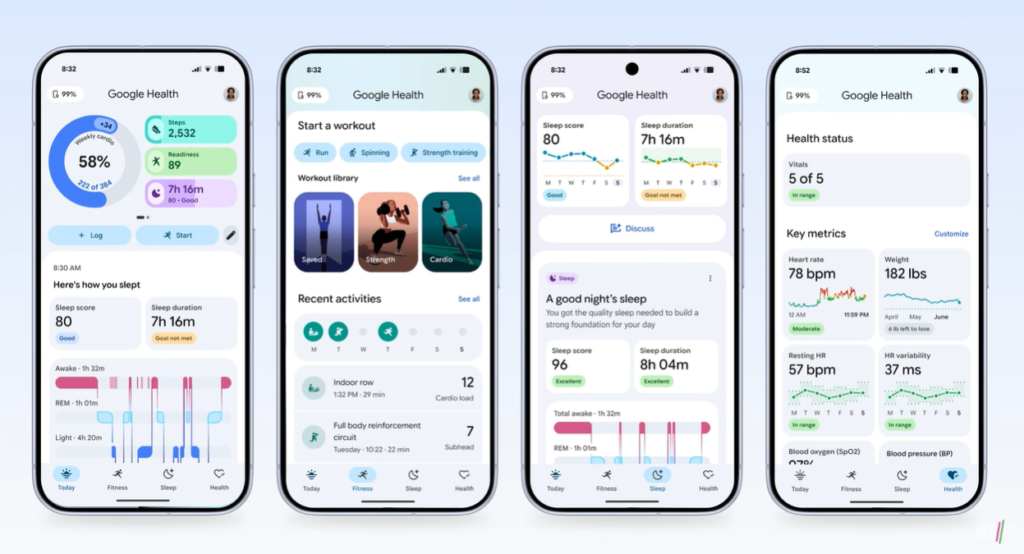
The Google Health app is essentially the next evolution of the Fitbit app, which has been in public beta preview for the past several months. Existing Fitbit app users will not need to download anything new — the app will automatically transition to the Google Health branding. The app is available on both Android and iOS, and Google has committed to maintaining feature parity between the two platforms, meaning iPhone users get the same full experience as Android users.
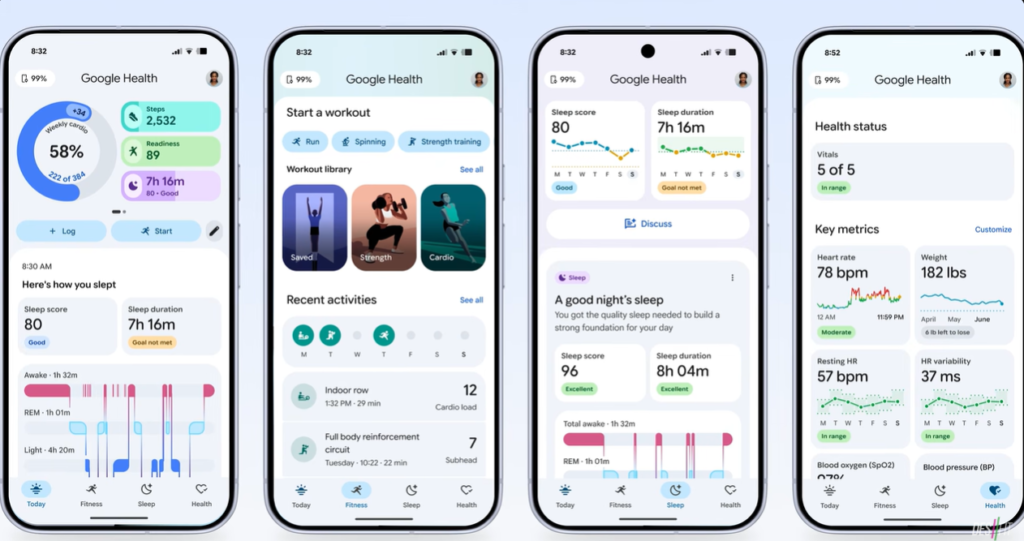
The app is organized into four main sections. The home tab surfaces the most important stats at a glance when you first open the app, including weekly cardio activity, daily steps, your current readiness score, and your most recent sleep data. These metrics are customizable so you can prioritize the data points that matter most to your personal health goals. Below the main stats panel, a 48-hour timeline shows a chronological log of recent activities and sleep sessions.
The fitness tab contains everything workout-related: workout suggestions tailored to your goals, personalized weekly training targets, workout videos, the ability to manually start a tracked session, and your full workout history with drill-down detail for each individual session. The sleep tab provides comprehensive sleep analytics, your sleep score, stage breakdowns, and trend data. The health tab displays all individual health metrics in one place, from resting heart rate to body temperature to HRV trends.
One of the most significant aspects of the Google Health app is its data aggregation capability. The app is designed to be a central hub for all your health data, not just data from Fitbit devices. It can ingest data from Apple Health on iPhone, Google Health Connect on Android, the Oura Ring, certain HRV and EEG wearables, sports watches from other manufacturers, and even medical records. This means your Google Health profile can become a comprehensive, longitudinal health record that draws from every device you own.
8. Google Health Premium Subscription and AI Coaching
Google has taken a notably consumer-friendly approach to its subscription model. The Fitbit Air costs $99 upfront, and with that purchase you receive three months of the Google Health Premium subscription at no additional cost. After those three months, the Premium subscription is entirely optional at a price of $9.99 per month or $99 per year. Crucially, if you choose not to subscribe, you do not lose access to your health data, nor do you lose the ability to see and interact with your data. The free experience still includes all your raw metrics, workout history, sleep stats, readiness scores, and activity logs.
What the Premium subscription adds is essentially an AI-powered coaching and insights layer. The Google Health Coach, powered by Google’s Gemini AI infrastructure, reads all your health and activity data and generates personalized insights, trend analysis, and recommendations. In the premium experience, the app becomes considerably more conversational and interactive. You can ask the coach questions in natural language: request a training plan for an upcoming marathon, ask for dietary suggestions based on your activity levels, inquire about why your HRV has been trending lower this week, or ask for a workout recommendation given your current recovery status.
The AI coaching capability also extends to nutritional tracking. Premium subscribers can use their phone camera to photograph meals, and the AI will analyze the image, identify the food items, estimate calorie and macronutrient content, and log the meal to your nutritional diary automatically. The sleep insights in premium mode are also deeper, providing personalized recommendations based on your historical patterns and correlating sleep quality with workout performance, recovery, and lifestyle factors.
It is also worth noting that Google Health Premium is included at no extra charge if you are already subscribed to Google’s AI Pro or Ultra Gemini plan, making the value proposition even more compelling for existing Google subscribers. The three-month free trial that comes with every Fitbit Air purchase gives you ample time to evaluate whether the premium features are worth the ongoing cost before you are asked to commit to a subscription.
Google Health: Free vs Premium Feature Comparison
| Feature | Free (No Subscription) | Premium ($9.99/month) |
| All health data access | Yes | Yes |
| Sleep tracking and stages | Yes | Yes |
| Readiness / Recovery score | Yes | Yes |
| Workout history and stats | Yes | Yes |
| Heart rate, HRV, SpO2 data | Yes | Yes |
| AFib background detection | Yes | Yes |
| AI text insights and analysis | No | Yes |
| Interactive AI Health Coach | No | Yes |
| AI-generated training plans | No | Yes |
| Sleep recommendations from AI | No | Yes |
| Photo-based food logging | No | Yes |
| Personalized weekly targets | No | Yes |
| In-depth trend analysis | No | Yes |
| Training plan storage post-trial | No | Yes |
9. Connectivity, Compatibility, and Ecosystem
The Fitbit Air uses Bluetooth 5.0 for communication with your smartphone, providing stable, low-power connectivity for continuous data syncing. Unlike GPS-equipped smartwatches, the Air does not include onboard GPS, but this is a deliberate engineering trade-off. GPS is one of the most battery-intensive components in any wearable device, and including it would likely reduce the battery life from seven days to closer to one or two. Instead, the Air uses connected GPS, leveraging the GPS module in your smartphone when you initiate a manually tracked outdoor workout.
The device is fully compatible with both Android and iOS, making it accessible to virtually every smartphone user. Google has made a specific commitment to maintaining complete feature parity between the Android and iOS versions of the Google Health app, meaning there is no penalty for being an iPhone user. This stands in contrast to products like the Pixel Watch, which remains exclusive to Android.
The third-party device integration is one of the most intriguing aspects of the Fitbit Air ecosystem. The Google Health app can serve as a unified hub for data from the Oura Ring, the Apple Watch (via Apple Health on iOS), various sports watches, and other Bluetooth health devices. When multiple devices are connected, the app allows you to set a priority hierarchy for each data type, so you can designate the Fitbit Air as your primary sleep tracker while using a different device as your primary workout tracker. The app will then pull the sleep data from the Air and the workout data from your other device without requiring you to manually switch between them.
10. Full Technical Specifications Summary
| Specification | Google Fitbit Air |
| Price | $99 (includes 3 months Premium) |
| Display | Screenless |
| Weight | 12 g (with band) |
| Thickness | 8.3 mm |
| Battery Life | Up to 7 days |
| Fast Charge | 5 min = 1 full day |
| Full Charge Time | ~90 minutes |
| Charging | Magnetic puck |
| Water Resistance | 50 m (5 ATM) |
| Connectivity | Bluetooth 5.0 |
| GPS | Connected GPS (via phone) |
| Compatible OS | Android and iOS |
| Heart Rate Monitor | Yes (24/7 optical) |
| SpO2 / Blood Oxygen | Yes |
| Skin Temperature | Yes |
| HRV Tracking | Yes (during sleep) |
| AFib Detection | Yes (FDA approved, background) |
| ECG | No |
| Sleep Tracking | Yes (light, deep, REM stages) |
| Smart Wake Alarm | Yes |
| Auto Exercise Detection | Yes (with AI learning) |
| Strength Training Auto | No (manual logging supported) |
| Rep Counting | No |
| Local Data Storage | 7 days activity / 1 day workout |
| Build Material | Recycled polycarbonate and PBT |
| Strap | Textile with stainless steel buckle |
| Band Options | Active, Elevated, Performance |
| Subscription | Optional: $9.99/month or $99/year |
| Subscription Included | AI coaching, training plans, food logging, deep insights |
| AI Health Coach | Yes (Premium) |
Summary: What Makes the Fitbit Air Special
The Google Fitbit Air is not just a new wearable. It is a strategic product that represents Google’s most serious and coherent push into the health tracking space to date. By combining accessible pricing, a no-mandatory-subscription model, Google’s AI capabilities, and a design that integrates with the broader health data ecosystem, the Fitbit Air positions itself as a genuine challenger to the category leader.
Its strengths lie in its price accessibility, the depth of the Google Health app ecosystem, the quality of the AI coaching on the premium tier, comfortable 24/7 wearability, and the fact that even without a subscription, users get a genuinely useful and data-rich experience. Its areas to watch include the accuracy of automatic activity detection compared to WHOOP’s proven track record in this area, the long-term reliability of the hardware, and how well the AI learning for activity classification actually performs in real-world use.
The Fitbit Air is available from May 26th, 2025. In the next section of this blog, we will examine the WHOOP 4.0 in similar depth before bringing both devices together in a head-to-head comparison table.
WHOOP 5.0?
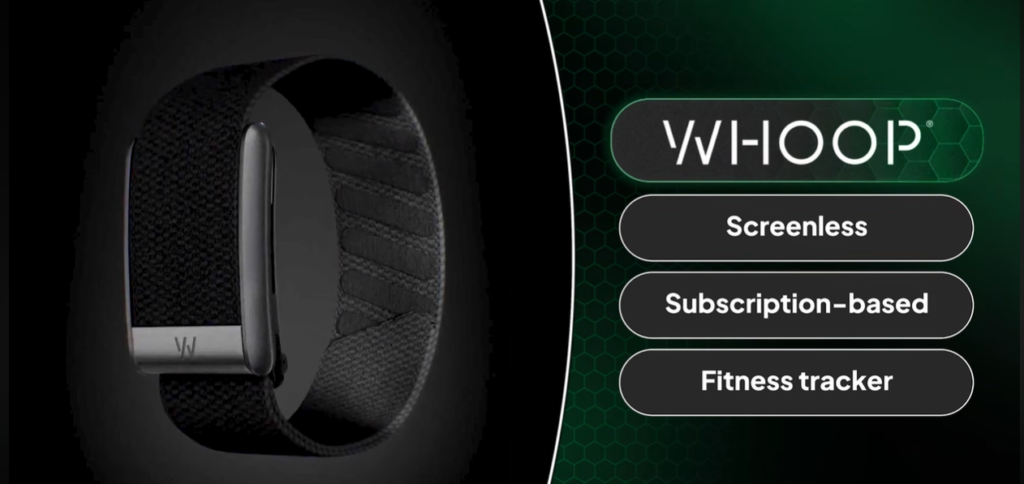
WHOOP 5.0 is the latest generation of the screenless, subscription-based fitness and health monitoring platform that has spent nearly a decade establishing itself as the gold standard in performance recovery tracking. At its core, WHOOP is less a gadget and more a coaching system that happens to come with a wearable attached. The device is a small, lightweight band with no screen, no buttons, and no display of any kind. Everything you interact with — every metric, every chart, every recommendation — lives inside the WHOOP mobile app.
The philosophy behind WHOOP is that most people do not need more data. They need data that has been processed, interpreted, and translated into actionable guidance. The three pillars of the WHOOP system — Strain, Recovery, and Sleep — are designed to answer three practical daily questions: How hard did you push your body today? How well did your body recover overnight? And how prepared are you to perform right now? The answers to these questions, delivered through simple numerical scores and supporting analytics, are what WHOOP users pay for and what has built the platform’s loyal following across professional sports, military, and the broader health-conscious consumer market.
WHOOP 5.0 represents a significant hardware upgrade from the 4.0 generation, with improvements to battery life, sensor accuracy, a revised heart rate algorithm rolled out in February 2026 that better separates true heart rate signal from motion artifacts, and the introduction of three new subscription tiers that expand the feature set available at each price point. The platform also introduced a medical-grade hardware variant for its highest subscription tier, marking WHOOP’s most serious move yet into clinical-adjacent health monitoring.
2. Design, Build, and Comfort
The WHOOP 5.0 band maintains the design language that has made the platform recognizable: a slim, rectangular sensor module that slots into a continuous loop band worn on the wrist. The device is deliberately non-decorative. There is no screen, no visible button, no LED indicator during normal use — just a flat, matte black sensor housing that disappears against the wrist. This minimal aesthetic is intentional. WHOOP users are meant to forget they are wearing the device, and the 26-gram weight of the standard Peak hardware makes that very easy to do.
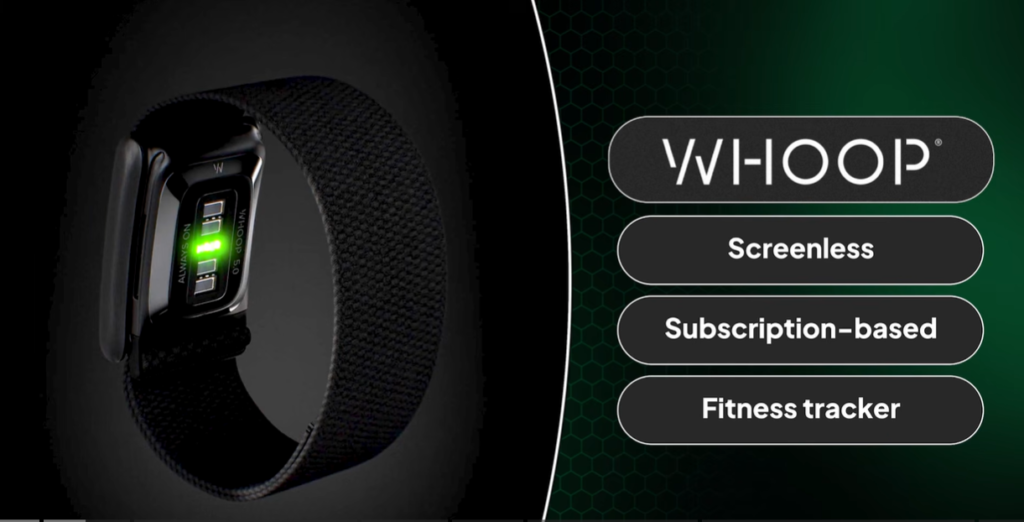
The band materials vary by subscription tier and personal preference. The standard band at the One tier level is a basic but functional option. Peak subscribers gain access to SuperKnit and SportsFlex band choices, with SuperKnit being widely praised for its softness and breathability. Premium materials like leather are available as add-on purchases. WHOOP also offers an ecosystem of athletic apparel — shirts, shorts, and sports bras — with integrated pockets for the WHOOP module, enabling bicep, forearm, upper arm, or torso-mounted wearing positions. This versatility is a genuine differentiator, particularly for athletes whose wrist-based sensor accuracy may be compromised by specific activities.
The device is rated at IP68 water resistance, surviving submersion up to 1.5 meters for up to 30 minutes. This makes it safe for swimming, showering, dishwashing, and most water-based sports. Both the primary device and the wireless charging power pack share this water resistance rating, meaning you do not need to remove or protect either component during water exposure. A minor real-world irritation noted by users is that the textile band can retain moisture for several minutes after immersion, which some find slightly uncomfortable though not harmful.
An important note for WHOOP 4.0 owners upgrading to the 5.0 hardware: the band connector format has changed, meaning existing bands purchased for the 4.0 are not compatible with the 5.0 module. This is a significant point of disappointment for long-term WHOOP users who have accumulated multiple bands at premium prices. The MG hardware used at the Life subscription tier has a different physical connector that is justified by its ECG electrode requirements, but the same incompatibility applying to the standard non-ECG 5.0 hardware has drawn criticism from the community.
WHOOP 5.0 Physical Specifications
| Specification | Detail |
| Weight | ~26–28 g |
| Display | None (Screenless) |
| Build Material | Nylon / sensor housing |
| Band Options | Core, SuperKnit, SportsFlex, Leather (add-on) |
| Alternative Wear Positions | Wrist, bicep, forearm, torso (via apparel) |
| Water Resistance | IP68 (1.5 m / 30 min) |
| Scratch Resistance | Yes |
| Shape | Rectangle |
| 4.0 Band Compatibility | No — new connector format |
| Charging Hardware | Wireless power pack (Peak/Life) or wire (One) |
3. Sensors, Health Metrics, and Tracking Capabilities
WHOOP 5.0 uses an advanced multi-LED photoplethysmography sensor array on the underside of the device. Some portions of human tissue absorb the LED light emitted by these sensors while others reflect it back, and the resulting patterns allow the device to calculate heart rate, blood oxygen saturation, heart rate variability, and skin temperature with high accuracy. WHOOP’s February 2026 algorithm update specifically addressed motion artifact rejection — the contamination of heart rate readings by movement — which is particularly important during high-intensity exercise where wrist movement can generate false signal.
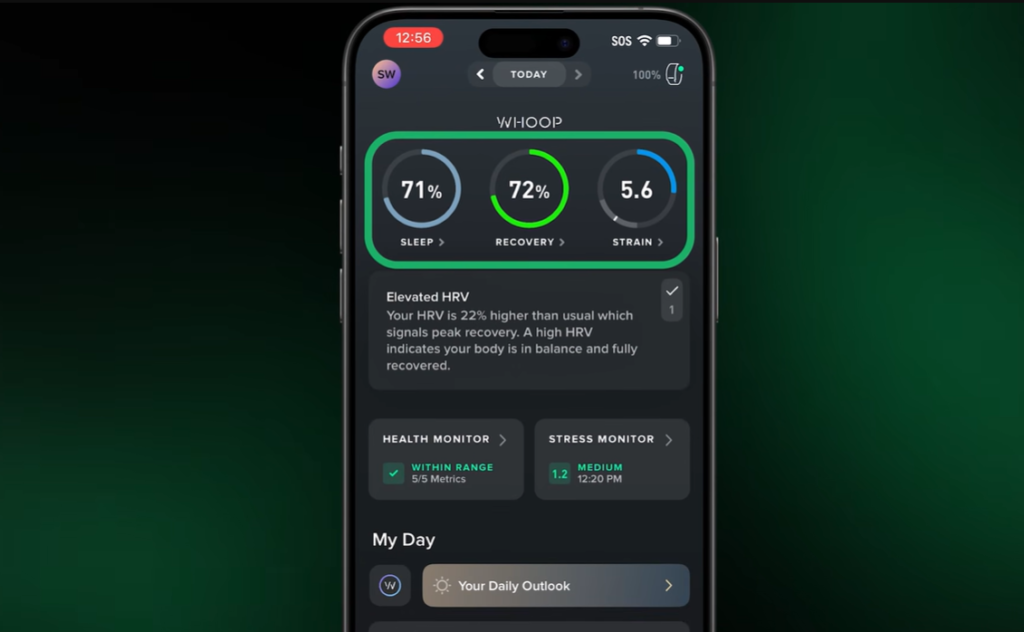
The three core metrics that define the WHOOP experience are Strain, Recovery, and Sleep. Strain is a cardiovascular load score on a scale of 0 to 21, calculated from heart rate zone time throughout the day. It accounts for both structured workout strain and incidental life strain from stress, illness, or prolonged physical activity. A Strain score of 0 to 9 represents light activity, 10 to 13 represents moderate activity, 14 to 17 represents hard effort, and 18 to 21 represents all-out maximum effort. WHOOP recommends targeting daily and weekly Strain levels that align with your recovery status, creating a feedback loop between effort and readiness.
Recovery is the morning readiness score calculated from the previous night’s sleep data combined with resting heart rate and HRV trends. It appears as a percentage from 0 to 100 and is color-coded: green indicates high readiness and suggests you can push hard, yellow suggests moderate effort is appropriate, and red indicates the body needs rest and recovery-focused activities. The Recovery score is the metric most WHOOP users anchor their training decisions around, and its correlation with perceived readiness has been validated across multiple independent studies.
WHOOP 5.0 also supports automatic activity detection across more than 100 recognized workout and sport types, a catalog significantly broader than most competing devices. The platform can distinguish between activity types that superficially resemble each other but produce different physiological patterns, such as mountain biking versus road cycling, or competitive tennis versus casual hitting. Activity detection accuracy has been a consistent strength of the platform and is one of the primary use-case arguments WHOOP makes to endurance athletes and team sport competitors.
Additional tracked metrics include VO2 Max estimation, continuous blood oxygen monitoring, skin temperature, step counting via accelerometer, and real-time heart rate zone display during workouts. The WHOOP Journal feature is a significant differentiator: it allows users to log over 300 behavioral and lifestyle variables — including alcohol consumption, caffeine intake, stress levels, illness, supplementation, and mood — and then correlates these logged inputs with recovery outcomes over time. This behavioral logging capability transforms WHOOP from a passive data collector into an active lifestyle experimentation platform, allowing users to empirically discover which habits help or hurt their personal recovery.
WHOOP 5.0 Sensor and Feature Summary
| Sensor / Feature | Available | Notes |
| Optical Heart Rate (PPG) | Yes | Continuous, 24/7 |
| Blood Oxygen (SpO2) | Yes | Continuous monitoring |
| Skin Temperature | Yes | Continuous |
| HRV Tracking | Yes | Continuous, used for Recovery score |
| Respiratory Rate | Yes | During sleep |
| Strain Score | Yes | 0–21 cardiovascular load scale |
| Recovery Score | Yes | Daily morning readiness % |
| Sleep Tracking (4 stages) | Yes | Awake, light, REM, slow-wave |
| VO2 Max Estimation | Yes | All tiers |
| Heart Rate Zones | Yes | All tiers |
| Step Counting | Yes | Accelerometer-based |
| Auto Activity Detection | Yes | 100+ activity types |
| WHOOP Journal | Yes | 300+ behavioral inputs |
| AI Coach (WHOOP Coach) | Yes | All tiers |
| Stress Monitor | Yes | Peak and Life tiers |
| Health Monitor | Yes | Peak and Life tiers |
| Healthspan / WHOOP Age | Yes | Peak and Life tiers |
| Pace of Aging | Yes | Peak and Life tiers |
| Women’s Hormonal Insights | Yes | All tiers |
| ECG / Heart Screener | Yes | Life tier only (MG hardware) |
| Irregular Heart Rhythm Alerts | Yes | Life tier only |
| Blood Pressure Insights (Beta) | Yes | Life tier only |
| GPS | No | Phone GPS required |
| Haptic Alarm | Yes | All tiers |
| Vibration Motor | Yes | Alarms and notifications |
4. Battery Life and Charging
WHOOP 5.0’s battery life is one of the most significant improvements from the 4.0 generation. The standard 5.0 hardware now delivers up to 14 days of continuous battery life on a single charge — double the previous generation’s real-world performance. For a 24/7 wear device, this is an enormous practical advantage. Going two weeks without needing to interact with the charging hardware means the device truly fades into the background of daily life in a way that 4 or 5-day devices cannot.
Charging is handled via a wireless power pack — a small supplementary battery that snaps directly onto the back of the WHOOP module while you are still wearing it. This means you never need to take the device off to charge it. The power pack connects magnetically, charges the WHOOP wirelessly, and can itself be recharged via USB-C. The entire charging process can happen while you sleep, shower, or work out, with no interruption to data capture. A full charge via the power pack takes approximately two hours.
It is important to note that wireless charging capability is exclusive to the Peak and Life subscription tiers. The entry-level One tier ships with a traditional wired charger that requires removing the device from the wrist for charging. This distinction is intentional — WHOOP has positioned the wireless charging experience as a meaningful differentiator for its mid and high tier subscriptions, not just a hardware feature.
5. Sleep Tracking and Recovery
Sleep is one of WHOOP’s three foundational pillars, and the depth of its sleep analytics is among the most sophisticated available in any consumer wearable. WHOOP tracks all four sleep stages: awake time during the night, light sleep, REM sleep, and slow-wave deep sleep. It measures sleep efficiency (the percentage of time in bed actually spent asleep), sleep consistency (how regular your sleep and wake times are across days and weeks), sleep debt (the accumulation of missed sleep versus your individual biological need), and respiratory rate during sleep as an early warning indicator of potential illness.
WHOOP’s sleep need calculation is personalized rather than generic. Rather than applying the universal guideline of eight hours, WHOOP calculates your individual sleep need based on your age, recent Strain scores, activity patterns, and historical sleep performance. On high-Strain days, your recommended sleep target will be higher. On rest days, it may be lower. This dynamic, data-driven sleep coaching is one of WHOOP’s most practically useful features for people who want to optimize their recovery scientifically rather than following generic rules.
The haptic alarm on WHOOP functions as a smart wake system: you set a desired wake window rather than a fixed time, and WHOOP will trigger the vibration motor when it detects you are in a lighter sleep stage during that window. WHOOP’s sleep data also feeds directly into the morning Recovery score, making the quality and duration of the previous night’s sleep a primary input in determining how aggressively you should push during the day’s training.
6. The WHOOP App and AI Coaching
The WHOOP app is clean, fast, and exceptionally well designed. It opens to the daily overview — Recovery score prominently displayed, Strain accumulation for the current day, and a snapshot of last night’s sleep. The design philosophy is to surface the most decision-relevant information immediately without requiring any navigation. Color coding — green, yellow, red — communicates readiness status at a glance, enabling rapid daily decisions without needing to read detailed text.
WHOOP Coach is the AI-powered conversational interface within the app. It allows users to ask natural language questions about their health data — why is my recovery low, what does my sleep data say about my stress levels, how should I structure this week’s training given my current strain trend — and receive contextually relevant, data-informed responses. WHOOP Coach also proactively surfaces personalized insights based on detected patterns in your data, including breathwork recommendations when elevated stress is detected, recovery optimization suggestions after a string of high-Strain days, and positive reinforcement when behavioral journal entries correlate with improved sleep or recovery scores.
The WHOOP Journal is a feature unique to the platform and genuinely powerful for users willing to engage with it consistently. By logging behavioral variables — sleep conditions, alcohol, caffeine, exercise type, stress events, illnesses, medications, and hundreds of other factors — users build a personal dataset that WHOOP’s algorithms then mine for correlations. Over time, the app can identify that your recovery is consistently lower the morning after you consume alcohol within three hours of bedtime, or that your REM sleep is measurably better when you exercise before noon rather than in the evening. These correlations are personalized to your specific physiology and habits, making the guidance increasingly relevant the longer you use the platform.
7. WHOOP Subscription Plans
WHOOP is a subscription-first product. Unlike the Fitbit Air, there is no meaningful non-subscription experience available. Your WHOOP membership is the product, and the hardware is included with the membership. When you purchase a WHOOP, you are committing to a monthly or annual fee, and the features available to you are determined by which tier you choose. The three current tiers are One, Peak, and Life.
The One plan runs at approximately $199 per year and provides the foundational WHOOP experience: sleep tracking, Recovery score, Strain score, step tracking, automatic activity detection, heart rate zone monitoring, VO2 Max estimation, women’s hormonal insights, and the WHOOP Coach AI. Hardware at this tier is the WHOOP 4.0 or 5.0 (depending on region at the time of subscription) with a wired charger. This tier is appropriate for users who want the core WHOOP functionality at the lowest entry cost.
The Peak plan at $239 per year is the most popular tier and represents the sweet spot of value within the WHOOP ecosystem. It includes all One plan features plus the WHOOP 5.0 hardware, wireless power pack charging, Stress Monitor, Health Monitor, Healthspan tracking, WHOOP Age estimation, and Pace of Aging metrics. The Stress Monitor tracks cortisol-proxy stress levels throughout the day, while the Health Monitor watches resting heart rate and HRV trends for anomalies that might signal oncoming illness, overtraining, or other health events. The Healthspan and WHOOP Age features compare your estimated physiological age with your chronological age and provide guidance on lifestyle changes that can improve that gap over time. The SuperKnit band upgrade is also included at this tier.
The Life plan at $359 to $369 per year is the premium tier and introduces medically oriented features through the WHOOP MG hardware — a variant with additional electrode sensors that enables clinical-grade ECG recording, irregular heart rhythm detection and notifications, and daily blood pressure insights (currently in beta and not yet medically certified). This tier is designed for users who are comfortable paying for the deepest available health monitoring, or for athletes, coaches, and individuals with specific cardiac health monitoring needs. The band at this tier is the SuperKnit Lux, the most premium fabric option in the WHOOP lineup.
WHOOP also offers family plans covering up to six people under a single billing arrangement, with shared goal tracking and competitive progress comparison between household members. The one-month free trial available through promotional channels includes a certified pre-owned WHOOP 5.0 device, allowing prospective subscribers to evaluate the platform before fully committing to an annual plan.
WHOOP Subscription Plan Comparison
| Feature | One ($199/yr) | Peak ($239/yr) | Life ($359/yr) |
| Hardware | WHOOP 4.0 or 5.0* | WHOOP 5.0 | WHOOP MG |
| Charging | Wired USB charger | Wireless power pack | Wireless power pack |
| Band Included | Core band | SuperKnit or SportsFlex | SuperKnit Lux |
| Sleep Tracking | Yes | Yes | Yes |
| Recovery Score | Yes | Yes | Yes |
| Strain Score | Yes | Yes | Yes |
| Auto Activity Detection (100+) | Yes | Yes | Yes |
| Heart Rate Zones | Yes | Yes | Yes |
| VO2 Max | Yes | Yes | Yes |
| Women’s Hormonal Insights | Yes | Yes | Yes |
| WHOOP Coach (AI) | Yes | Yes | Yes |
| WHOOP Journal (300+ inputs) | Yes | Yes | Yes |
| Stress Monitor | No | Yes | Yes |
| Health Monitor | No | Yes | Yes |
| Healthspan / WHOOP Age | No | Yes | Yes |
| Pace of Aging | No | Yes | Yes |
| ECG / Heart Screener | No | No | Yes (MG hardware) |
| Irregular Heart Rhythm Alerts | No | No | Yes |
| Blood Pressure Insights (Beta) | No | No | Yes |
| Family Plan Available | Yes | Yes | Yes |
8. Privacy Policy and Data Ownership
WHOOP’s privacy policy is notably consumer-protective. The company commits to never sharing personal health data with third parties and has stated publicly that it will pursue legal action if necessary to defend user data against third-party access. For individuals who store highly sensitive biometric data on the platform — including HRV trends, sleep patterns, blood oxygen, skin temperature, and behavioral journal entries — this commitment provides meaningful reassurance. Frequent software updates and a publicly maintained research blog demonstrate ongoing investment in the platform’s data quality and scientific validity.
9. Full Technical Specifications — WHOOP 5.0
| Specification | WHOOP 5.0 |
| Price / Model | Subscription-based (hardware included) |
| Entry Plan | One — $199/year |
| Mid Plan | Peak — $239/year |
| Premium Plan | Life — $359/year |
| Display | None (Screenless) |
| Weight | ~26–28 g |
| Battery Life | Up to 14 days (5.0 hardware) |
| Charging (Peak/Life) | Wireless power pack (wear-while-charging) |
| Charging (One) | Wired USB charger (remove to charge) |
| Full Charge Time | ~2 hours |
| Water Resistance | IP68 (1.5 m / 30 min) |
| Bluetooth | Yes |
| GPS | No (phone GPS required) |
| Compatible OS | Android and iOS |
| Heart Rate Monitor | Yes (24/7 optical PPG) |
| SpO2 / Blood Oxygen | Yes |
| Skin Temperature | Yes |
| HRV Tracking | Yes (continuous) |
| Respiratory Rate | Yes (during sleep) |
| Strain Score (0–21) | Yes |
| Recovery Score (%) | Yes |
| Sleep Tracking (4 stages) | Yes |
| Smart Wake Alarm | Yes (haptic) |
| Auto Activity Detection | Yes — 100+ types |
| WHOOP Journal | Yes — 300+ behavioral inputs |
| AI Coach | Yes — all tiers |
| Stress Monitor | Yes — Peak and Life |
| Health Monitor | Yes — Peak and Life |
| WHOOP Age / Healthspan | Yes — Peak and Life |
| ECG (Heart Screener) | Yes — Life tier (MG hardware) |
| Blood Pressure (Beta) | Yes — Life tier |
| Family Plan | Yes — up to 6 members |
| Band Styles | Core, SuperKnit, SportsFlex, Leather |
| Bicep / Arm Band | Yes |
| Privacy Commitment | No third-party data sharing |
| Trial Available | 1-month free (certified pre-owned device) |
Head-to-Head: Google Fitbit Air vs WHOOP 5.0
Google Fitbit Air vs WHOOP 5.0 The Complete Comparison Table
| Category | Google Fitbit Air | WHOOP 5.0 |
| Price to Start | $99 (one-time) | $199/year (subscription) |
| Subscription Required | No | Yes (mandatory) |
| Optional Subscription | $9.99/mo or $99/yr | N/A — subscription is the product |
| No-Subscription Experience | Full data access, no AI coaching | No meaningful experience without sub |
| Display | None (Screenless) | None (Screenless) |
| Weight | 12 g | ~26–28 g |
| Battery Life | Up to 7 days | Up to 14 days |
| Fast Charging | 5 min = 1 full day | Not available |
| Charge Without Removing | No (magnetic puck) | Yes (wireless power pack — Peak/Life) |
| Water Resistance | 50 m (5 ATM) | IP68 (1.5 m / 30 min) |
| Bluetooth | 5.0 | Yes |
| GPS | Connected (phone) | Connected (phone) |
| Compatible OS | Android and iOS (full parity) | Android and iOS |
| Heart Rate Monitor | Yes (24/7 PPG) | Yes (24/7 PPG) |
| SpO2 / Blood Oxygen | Yes | Yes |
| Skin Temperature | Yes | Yes |
| HRV Tracking | Yes (sleep) | Yes (continuous) |
| Respiratory Rate | Not specified | Yes (during sleep) |
| Recovery Score | Yes (readiness score) | Yes (Recovery % — 0–100) |
| Strain / Training Load | Yes (cardio load) | Yes (Strain — 0–21 scale) |
| AFib Detection | Yes (FDA approved, background) | Life tier only (ECG via MG hardware) |
| ECG / Heart Screener | No | Yes (Life tier only) |
| Blood Pressure Insights | No | Yes (Life tier — beta) |
| Sleep Tracking | Yes — 4 stages | Yes — 4 stages |
| Sleep Need Personalization | Not specified | Yes (dynamic, data-driven) |
| Smart Wake Alarm | Yes | Yes |
| Auto Activity Detection | Yes (fewer types, AI learning) | Yes (100+ types, proven accuracy) |
| Bicep / Arm Band | Not at launch | Yes |
| AI Coach | Yes (Premium — Gemini AI) | Yes (WHOOP Coach — all tiers) |
| AI Coaching Without Sub | No (needs Premium) | Included in all membership plans |
| Behavioral Journal | No dedicated feature | Yes — 300+ inputs (WHOOP Journal) |
| WHOOP Age / Healthspan | No | Yes (Peak and Life) |
| Stress Monitor | No dedicated feature | Yes (Peak and Life) |
| Health Monitor / Alerts | No dedicated feature | Yes (Peak and Life) |
| Women’s Hormonal Insights | Not specified | Yes — all tiers |
| VO2 Max | Not specified | Yes — all tiers |
| Third-party Integration | Oura, Apple Watch, others | Limited third-party ecosystem |
| Medical Records Integration | Yes (via Google Health) | No |
| Family / Group Plans | Not available | Yes — up to 6 members |
| Privacy Commitment | Google ecosystem data policies | No third-party sharing commitment |
| 1-Month Free Trial | 3 months Premium included | 1 month (certified pre-owned device) |
| Lifetime Warranty | Not specified | Yes |
| Band Ecosystem at Launch | Limited (3 styles) | Extensive (multiple materials + apparel) |
Detailed Category Analysis
Price and Value
The pricing difference between these two products is stark and strategically deliberate. At $99 with no mandatory ongoing cost, the Fitbit Air has an accessible entry price that is fundamentally different from WHOOP’s subscription model. For a user who wears the device for three years, the total cost of Fitbit Air with Premium subscription is approximately $99 plus $297, totaling around $396. The total cost of WHOOP Peak over the same three years is approximately $717. That is a significant difference, and it matters enormously for price-sensitive consumers. However, for users who find the subscription value compelling on both platforms, the question becomes less about total cost and more about which subscription delivers better return per dollar spent.
Battery Life
WHOOP 5.0 wins this category decisively with up to 14 days of battery life versus the Fitbit Air’s 7 days. For a device designed to be worn continuously without interruption, battery life is a primary quality-of-life factor. WHOOP’s wear-while-charging wireless power pack system is also superior for the day-to-day charging experience at the Peak and Life tiers, as you never need to remove the device. The Fitbit Air’s 5-minute fast charge is a practical and clever workaround for its shorter lifespan, but 14 days between charges is objectively more convenient than 7.
Auto Activity Detection
WHOOP holds a clear advantage here based on its years of refinement and catalog breadth. With over 100 recognized activity types and a track record of impressive accuracy in distinguishing between similar activities, WHOOP’s auto-detection has been a primary selling point for athletes across many disciplines. The Fitbit Air’s detection is newer, more limited in initial scope, and relies on a machine learning adaptation system that will improve over time but starts from a lower baseline. For users whose primary workouts are common activities like running, cycling, and gym training, the gap may be minimal in practice. For endurance sport specialists or multi-disciplinary athletes, WHOOP’s catalog depth is a meaningful advantage.
Sleep Tracking and Recovery
Both devices track the same fundamental sleep metrics with broadly comparable sensor hardware. WHOOP’s dynamic sleep need calculation — which adjusts your recommended sleep target based on recent Strain and individual physiological patterns — is a more sophisticated approach than a fixed target recommendation. However, Google’s 15 percent accuracy improvement in sleep stage classification and the seamless device-switching capability between Fitbit Air and Pixel Watch add real value for users in the Google ecosystem. This category is close, with WHOOP holding a slight edge in depth of recovery analytics and the Fitbit Air competitive on comfort and ecosystem integration.
AI Coaching and Insights
This is one of the most interesting competitive battlegrounds. WHOOP Coach is available to all subscription tiers and has been refined over years of user interaction. Google Health Coach is powered by Gemini AI, which represents some of the most advanced large language model technology currently available, and the early feedback from beta testers has been genuinely impressive. The food photography logging, medical record integration, and conversational flexibility of the Gemini-powered coach may represent a generational leap in the quality of AI health guidance. The key caveat is that Google Health Coach requires the Premium subscription, whereas WHOOP Coach is included in all plans. If a user does not subscribe to Google Health Premium, they have no AI coaching at all, while even a WHOOP One subscriber has access to WHOOP Coach.
Health Monitoring Depth
WHOOP wins on overall health monitoring breadth, particularly the behavioral journal, stress monitoring, health span metrics, and WHOOP Age estimation available at the Peak tier. The Life tier’s ECG capability, blood pressure insights, and irregular heart rhythm detection add clinical-adjacent health monitoring that the Fitbit Air does not offer at any tier. Google’s background AFib detection is a meaningful health safety feature and is available without a subscription, but it represents passive monitoring rather than the active, on-demand clinical-grade ECG that WHOOP MG provides.
Ecosystem and Integration
Google’s ecosystem advantages are substantial. The ability to aggregate health data from Apple Watch, Oura Ring, Pixel Watch, and third-party devices into a single unified health profile is genuinely differentiated. No other consumer health platform offers this level of cross-device consolidation. For users with multiple health devices, or for users who want the flexibility to switch devices in the future without losing their health history, the Google Health app is a compelling platform. WHOOP operates as a more closed ecosystem, and while this enables tighter optimization of the experience, it limits flexibility for multi-device users.
The Verdict: Which One Is Right for You?
After exhaustively reviewing both devices across every meaningful category, the honest answer is that neither device is universally better. They are built for different users with different priorities, and choosing between them requires an honest assessment of how you plan to use a health tracker and what you value most.
Choose the Google Fitbit Air if you are primarily motivated by accessible entry pricing, you do not want to commit to a mandatory ongoing subscription, you are already in the Google or Fitbit ecosystem, you value cross-device data consolidation, you want the option of AI coaching without being required to pay for it from day one, or you prioritize sleep comfort and want a lighter, thinner device for overnight tracking. The Fitbit Air is also the right choice if you want a product that can genuinely stand on its own merits without a subscription and deliver real health insights to casual or moderate health trackers who do not need the full competitive athlete toolkit.
Choose the WHOOP 5.0 Peak or Life plan if you are a serious endurance athlete or competitive sport participant who needs the deepest available recovery analytics, you want to track over 100 activity types with market-leading accuracy, you value the behavioral journal and its ability to correlate lifestyle habits with biometric outcomes, you want 14-day battery life and wear-while-charging convenience, you need features like stress monitoring, health span tracking, WHOOP Age, and biological age comparison, or you want the most rigorously validated health tracking platform currently available in the consumer wearable category. The Life tier is specifically appropriate if cardiac health monitoring through ECG and irregular rhythm detection is a priority for you.
The most significant structural difference between the two products is philosophical rather than technical. WHOOP asks you to invest in a subscription before the hardware, believing that the data analysis and coaching is the product, and the hardware is merely the collection mechanism. Google is asking you to invest in the hardware first, offering the data for free, and making the AI layer an optional upgrade. As AI coaching becomes an increasingly central part of health wearable value, Google’s approach may prove more durable for mainstream consumers. For elite performers who have already proven to themselves that deep health analytics improve their performance, WHOOP’s track record and specialized depth remain the gold standard.
Both devices represent serious products from serious companies. The Google Fitbit Air is available from May 26th, 2025. WHOOP 5.0 is available now with a one-month free trial through promotional links. Whichever you choose, the simple act of consistently wearing either device and engaging with its data will give you a more informed relationship with your own body than the vast majority of people will ever have. That, ultimately, is the whole point.

